

ON THE WINGS OF THE WIND: The Untold Story of History’s First Flight. By Richard Kigel. Part 27.
WE WATCHED THE AMAZING SCENE BELOW US AND ALL WE COULD DO WAS LAUGH AND LAUGH AND LAUGH. I HAVE NEVER SEEN SUCH A SIGHT. THEY CAME POURING OUT FROM EVERYWHERE. THE ENDLESS PROCESSION OF HUMANITY PUT ME IN MIND OF THE CHILDREN OF ISRAEL COMING OUT OF EGYPT.
***********************************************************************************************************
SUMMARY: THE STORY SO FAR…
Josiah, a young slave 12 years of age, lives in a cabin in the slave quarters of a Virginia tobacco plantation with Auntie Bee, Mose, the plantation handyman, two young children, Randall and Emily. He notices Mose leaving the cabin in the middle of the night and follows him to his secret workshop in the woods where Mose is building some sort of strange contraption. Mose tells him it is a machine that will fly him to freedom. Now that he knows Mose’s secret, he stays to help build the flier. After mishaps, false starts and setbacks—the flier tumbles down the mountain and is seriously damaged—they are attacked by snakes—mountain lions lurk all around them—they realize someone has been spying on them and they think their escape plan has been discovered. Finally, their time has come. Now they are in the air, riding on the wings of the wind.
***********************************************************************************************
We left the town and soon we were floating over open country. We passed over farms and fields with crops in neat rows and gangs of slaves working the land.
From high up, everyone looked small, about as big as the tip of my little finger. But I knew they were full size, flesh and blood men and women. Forty or fifty slaves were scattered around the field, working their rows, cultivating the ground, digging and hoeing, chopping and clearing, bending and sweating.
Two overseers watched them work. One was standing among them, snapping his whip on the ground as he yelled at them to keep up the pace while the other patrolled on horseback.
When we got closer, I could hear the workers singing as slaves do. It was a sad and slow song.
De rough rocky road what Moses done travel,
I’se bound to carry my soul to de Lord;
It’s a mighty rocky road but I must done travel,
And I’se bound to carry my soul to de Lord.
They sang because they had to. Overseers didn’t like a silent slave. If you were too quiet in the fields, they’d holler: “Make a noise there! Let’s hear it!” They made us sing so they would know where we were at all times.
So we sang while we worked. They didn’t much care what we sang as long as they could hear us. That was one thing we could do on our own. We sang what we wanted.
Suddenly, someone was shouting from below. “Halloo! Halloo! Hey you! Hey up dere!”
A woman saw us and stopped working. Now she was looking up and pointing at us.
“Oh, Lord, have mercy!” she cried. “Fly away! Fly away! Fly away free!”
The singing ended. Dozens of tired, sweaty workers stood dead still, looking skyward, staring straight at us. They were frozen, bewildered. Nobody knew what to make of us. It was an improbable sight. I can’t blame them if they thought they were seeing ghosts.
Then the woman who saw us first threw down her hoe and ran, following beneath us, shouting and waving. Her piercing cries echoed across the field. “Fly away! Fly away! Fly away, free! Mercy! Mercy! Take me! Take me!”
Shrieking and whooping exploded all over the field. One by one, they tossed away their shovels, rakes and hoes and ran toward us. We saw black bodies moving everywhere. They were coming at us from every direction, shouting, singing, wailing and praying.
“Hallelujah!”
“Fly to the Promised Land!”
“Take us to River Jordan!”
“Come back for us!”
“Bring us home!
“Lord have mercy!”
Their song of sorrow, sweat and tears had turned to squeals of joy.
It was a stampede. The crowd was on a mad dash to keep pace with us, while calling and waving and jumping at us. They ran, arms outstretched, trying to touch us. Everybody wanted to come up with us.
We watched the amazing scene below us and all we could do was laugh and laugh and laugh. I have never seen such a sight. There was a woman running with a pail on her head, the rice smoking in it just as she’d taken it from the fire. Her young child was hanging on behind her and another one was holding tight to the top of her head and with his other hand he was digging into the rice-pot and eating with all his might.
They came pouring out from everywhere, bags on their shoulders and across their backs, some with pigs in them, baskets on their heads, their young ones trailing behind. Some were carrying chickens tied by the legs, with two or three children holding on to their mother’s dress. What a chorus of sounds—young ones squealing, chickens squawking, pigs snorting.
The endless procession of humanity put me in mind of the children of Israel coming out of Egypt.
The two overseers came charging after the runaways, shouting, cursing and cracking their whips. The overseer on his horse overtook a woman running with her baby. His horse at full stride, he reached down to grab her, trying to pull her on the horse with him so he could bring her back to the field.
The other slaves didn’t stand for that. Four men jumped right up on that horse and they pulled the overseer down. The horse kicked and bucked and quickly galloped away. The overseer tumbled head over heels and the woman ran away with her baby.
That was something I had never seen before. I watched, fascinated, as the overseer picked himself up and took off. He was aiming to get out of there as fast as he could—and as far as I know, he never stopped running.
The second overseer saw what was happening and followed the other one and soon they both disappeared.
The field was covered with singing, shouting, men and women, delirious with joy, exulting in their sudden freedom. And they were all coming after us.
Most of them kept up the chase as long as they could. Some quit and headed for the woods. They were making their escape.
Good for them. I figured those ornery overseers would be back looking for them with men and horses, rifles and whips, dogs and chains. Their owners would certainly be back to collect their property.
The slaves knew it too. For a slave who ran away, the trouble was just beginning. But they ran anyway.
I was glad we were able to help make the notion of freedom real for those folks. Once the idea takes root inside a person, it never shrinks, it never hides, it never disappears. It can only grow stronger. Like I said, freedom is a powerful word.
We waved to the happy folks below as long as they kept waving and calling us. We waved until they scattered and disappeared. Soon the field was empty. Everyone was hiding.
***********************************************************************************************************
SUMMARY: THE STORY SO FAR…
Josiah, a young slave 12 years of age, lives in a cabin in the slave quarters of a Virginia tobacco plantation with Auntie Bee, Mose, the plantation handyman, two young children, Randall and Emily. He notices Mose leaving the cabin in the middle of the night and follows him to his secret workshop in the woods where Mose is building some sort of strange contraption. Mose tells him it is a machine that will fly him to freedom. Now that he knows Mose’s secret, he stays to help build the flier. After mishaps, false starts and setbacks—the flier tumbles down the mountain and is seriously damaged—they are attacked by snakes—mountain lions lurk all around them—they realize someone has been spying on them and they think their escape plan has been discovered. Finally, their time has come. Now they are in the air, riding on the wings of the wind.
***********************************************************************************************
We left the town and soon we were floating over open country. We passed over farms and fields with crops in neat rows and gangs of slaves working the land.
From high up, everyone looked small, about as big as the tip of my little finger. But I knew they were full size, flesh and blood men and women. Forty or fifty slaves were scattered around the field, working their rows, cultivating the ground, digging and hoeing, chopping and clearing, bending and sweating.
Two overseers watched them work. One was standing among them, snapping his whip on the ground as he yelled at them to keep up the pace while the other patrolled on horseback.
When we got closer, I could hear the workers singing as slaves do. It was a sad and slow song.
De rough rocky road what Moses done travel,
I’se bound to carry my soul to de Lord;
It’s a mighty rocky road but I must done travel,
And I’se bound to carry my soul to de Lord.
They sang because they had to. Overseers didn’t like a silent slave. If you were too quiet in the fields, they’d holler: “Make a noise there! Let’s hear it!” They made us sing so they would know where we were at all times.
So we sang while we worked. They didn’t much care what we sang as long as they could hear us. That was one thing we could do on our own. We sang what we wanted.
Suddenly, someone was shouting from below. “Halloo! Halloo! Hey you! Hey up dere!”
A woman saw us and stopped working. Now she was looking up and pointing at us.
“Oh, Lord, have mercy!” she cried. “Fly away! Fly away! Fly away free!”
The singing ended. Dozens of tired, sweaty workers stood dead still, looking skyward, staring straight at us. They were frozen, bewildered. Nobody knew what to make of us. It was an improbable sight. I can’t blame them if they thought they were seeing ghosts.
Then the woman who saw us first threw down her hoe and ran, following beneath us, shouting and waving. Her piercing cries echoed across the field. “Fly away! Fly away! Fly away, free! Mercy! Mercy! Take me! Take me!”
Shrieking and whooping exploded all over the field. One by one, they tossed away their shovels, rakes and hoes and ran toward us. We saw black bodies moving everywhere. They were coming at us from every direction, shouting, singing, wailing and praying.
“Hallelujah!”
“Fly to the Promised Land!”
“Take us to River Jordan!”
“Come back for us!”
“Bring us home!
“Lord have mercy!”
Their song of sorrow, sweat and tears had turned to squeals of joy.
It was a stampede. The crowd was on a mad dash to keep pace with us, while calling and waving and jumping at us. They ran, arms outstretched, trying to touch us. Everybody wanted to come up with us.
We watched the amazing scene below us and all we could do was laugh and laugh and laugh. I have never seen such a sight. There was a woman running with a pail on her head, the rice smoking in it just as she’d taken it from the fire. Her young child was hanging on behind her and another one was holding tight to the top of her head and with his other hand he was digging into the rice-pot and eating with all his might.
They came pouring out from everywhere, bags on their shoulders and across their backs, some with pigs in them, baskets on their heads, their young ones trailing behind. Some were carrying chickens tied by the legs, with two or three children holding on to their mother’s dress. What a chorus of sounds—young ones squealing, chickens squawking, pigs snorting.
The endless procession of humanity put me in mind of the children of Israel coming out of Egypt.
The two overseers came charging after the runaways, shouting, cursing and cracking their whips. The overseer on his horse overtook a woman running with her baby. His horse at full stride, he reached down to grab her, trying to pull her on the horse with him so he could bring her back to the field.
The other slaves didn’t stand for that. Four men jumped right up on that horse and they pulled the overseer down. The horse kicked and bucked and quickly galloped away. The overseer tumbled head over heels and the woman ran away with her baby.
That was something I had never seen before. I watched, fascinated, as the overseer picked himself up and took off. He was aiming to get out of there as fast as he could—and as far as I know, he never stopped running.
The second overseer saw what was happening and followed the other one and soon they both disappeared.
The field was covered with singing, shouting, men and women, delirious with joy, exulting in their sudden freedom. And they were all coming after us.
Most of them kept up the chase as long as they could. Some quit and headed for the woods. They were making their escape.
Good for them. I figured those ornery overseers would be back looking for them with men and horses, rifles and whips, dogs and chains. Their owners would certainly be back to collect their property.
The slaves knew it too. For a slave who ran away, the trouble was just beginning. But they ran anyway.
I was glad we were able to help make the notion of freedom real for those folks. Once the idea takes root inside a person, it never shrinks, it never hides, it never disappears. It can only grow stronger. Like I said, freedom is a powerful word.
We waved to the happy folks below as long as they kept waving and calling us. We waved until they scattered and disappeared. Soon the field was empty. Everyone was hiding.


PRIMARY SOURCES
• De rough rocky road what Moses done travel…
“Us makes up songs ‘cause us couldn’t read or write. I ‘member dis one:
De rough rocky road what Moses done travel,
I’se bound to carry my soul to de Lord’
It’s a might rocky road but I must done travel,
And I’se bound to carry my soul to de Lord.”
Lorenzo Ezell, Texas, age 87, Federal Weriter’s Project, 1937
• They sang because they had to. Overseers didn’t like a silent slave. If you were too quiet in the fields they’d holler: “Make a noise there! Let’s hear it!” They made us sing so they would know where we are at all times.
“Slaves were expected to sing as well as to work. A silent slave was not liked, either by masters or overseers. ‘Make a noise there! Make a noise there!’—were words usually addressed to slaves when they were silent.
This and the natural disposition of the Negro to make a noise in the world may account for the almost constant singing among them when at their
work. There was generally more or less singing among the teamsters at all times. It was a means of telling the overseer in the distance where they were and what they were about.”
Frederick Douglas, 1892
• We watched the amazing scene below and all we could do was laugh and laugh and laugh. I have never seen such a sight. There was a woman running with a pail on her head, the rice smoking in it just as she’d taken it from the fire. Her young child was hanging on behind her and another one was holding tight to the top of her head and with his other hand he was digging into the rice-pot and eating with all his might.
They came pouring out from everywhere, bags on their shoulders and across their backs, some with pigs in them, baskets on their heads and their young ones trailing behind. Some were carrying chickens tied by the legs, with two or three children holding on to their mother’s dress. What a chorus of sounds with the young ones squealing, the chickens squawking and pigs snorting. The endless procession of humanity put me in mind of the children of Israel coming out of Egypt.
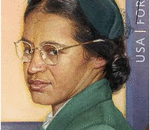
On June 1, 1863, Harriet Tubman became the first woman to plan and execute an armed expedition during the Civil War. Acting as advisor and advance scout for Colonel James Montgomery, Harriet Tubman let a raid from Port Royal, South Carolina, some twenty-five miles up the Combahee River.
The object of the expedition, Tubman told Sarah Bradford was “to take up the torpedoes placed by the rebels in the river, to destroy railroads and bridges and to cut off supplies from the rebel troops.”
According to Bradford:
“Harriet describes in the most graphic manner the appearance of the plantations as they passed up the river, the frightened negroes leaving their work and taking to the woods at the sight of the gunboats…But the word was passed along by the mysterious telegraphic communication existing among these simple people that these were ‘Lincoln’s gunboats come to set them free.’
“In vain, the drivers used their whips, in their efforts to hurry the poor creatures back to their quarters. They all turned and ran for the gun-boats. They came down every road, across every field, just as they had left their work and their cabins, women with children clinging around their necks, hanging to their dresses, running behind, all making at full speed for ‘Lincoln’s gunboats.”
“I never seen such a sight,” said Harriet. “We laughed and laughed and laughed. Here you’d see a woman with a pail on her head, rice a smoking in it just as she’ taken it from the fire, a young one hanging on behind, one hanging roun her forehead to hold on, the other hand digging into the rice-pot, eatin with all its might…hold of her dress were two or three more, down her back a bag with a pig in it…
“Sometimes the women would come with twins hangin roun’ der necks; ‘Pears like I enver see so many twins in my life. Bags on their shoulders, baskets on the heads and young ones behind, pigs squealin, chickens screamin, young ones sqealin.”
Harriet Tubman, interviewed by Sarah Bradford, 1869.
“Some had white blankets on their heads with their things done up in them. And them that hadn’’t a pot of rice would have a child in their arms, sometimes one or two holdin on to their mother’s dress, some carryin two chillern, one astride of the mother’s neck, holdin on her forehead an another in her arms…
“Some had bags on there backs with pigs in them. Some had chickens tied by the legs, an so child squallin, chickens squawkin, an pigs squealin, they all come runnin to the gun boats through the rice fields just like a procession.
“Thinks I, these here puts me in mind of the childern of Israel comin out of Egypt…
“I looked at them about two minutes and then I sung to them…
Then they throwed up there hands an began to rejoice and shout ‘Glory!’…
“I kept on singin until all were brought on board. We got 800 people that day.”
Harriet Tubman, Interviewed by Emma Telford, 1904