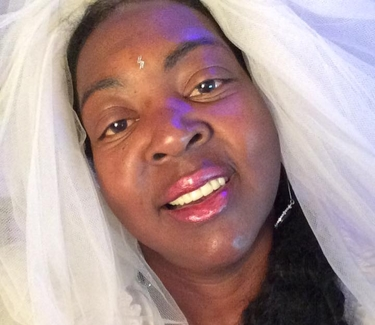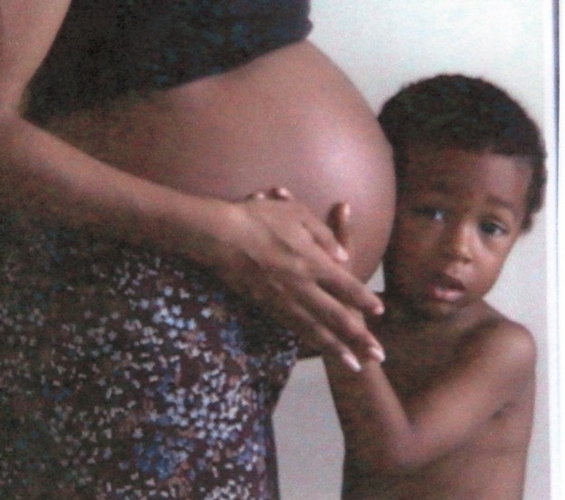
When Betty Morrow-Taylor decided to have a baby, she did everything the right way. She was healthy. She didn't drink, never smoked and wasn't overweight. She was educated and received prenatal care during her pregnancies. Yet despite Morrow-Taylor best efforts to deliver a healthy baby, she endured two miscarriages, and one of her two sons was born premature.
"I was a woman who had no issues -- yet landed in those statistics," said Morrow-Taylor, a manager of patient services for a biotech pharmaceutical company in North Carolina.
Morrow-Taylor's story isn't unique. Black women are more than twice as likely than white women to experience infant mortality or deliver premature babies. In 2005, infant mortality rates for black women due to premature births were more than double the national average, 6 deaths per 1,000 births, to 2.4 per 1,000 births, according to the Centers for Disease Control and Prevention. And when compared to their white counterparts, black women's infant mortality rates related to premature births was more than three times higher.
Although black infant mortality rates have declined by 4.3 percent from 2000 to 2006, the rate, 13 deaths per 1,000 births, was still nearly double the national average, according to the Centers for Disease Control and Prevention. September is infant mortality awareness month.
Morrow-Taylor said she was shocked when she learned about the disproportionate incidence of infant mortality and premature births in the black community. "It's a crisis that's going in that doesn't get much attention," she said. "There's a lot of women out there who share my story."
African-American female college graduates also suffer an infant mortality rate that is more than double that of their white counterparts -- 10.2 deaths per 1,000 births compared to 3.7 per 1,000. In fact, white women who dropped out of high school have a lower rate of infant mortality than college-educated black women -- 9.9 deaths per 1,000 births to 10.2, according to the Vital Statistics of the United States.
"Why is it that African-American women with college degrees still have worse birth outcomes than white women who haven't graduated high school?" asked Larry Adelman, the creator and executive producer of ""Unnatural Causes":http://www.unnaturalcauses.org," a documentary that explores health disparities in the U.S., including black infant mortality. "That is utterly striking."
In Adelman's film, health experts argue that the stress of a lifetime navigating a racially stratified society, as well as dealing with racism that is structural, interpersonal and internalized, weathers the body and could be to blame for the prevalence of infant mortality and low birth weight in the black community. For example, when the body is stressed, it produces cortisol, a hormone that can induce labor, Adelman said.
Black women who are born outside of the U.S. have a higher rate of infant mortality than other races--10 deaths per every 1,000 births--but it's still lower than native born black women, who had a rate of 13 deaths for every 1,000 babies born in 2006, according to the U.S. Vital Statistics System.
"Until we address these issues head on -- of what it means to live in a racist society--we're not going to address this," Adelman said.
Posted By:
Wednesday, September 29th 2010 at 10:37AM
You can also
click
here to view all posts by this author...