Entrepreneurs help state of black unemployment in Cleveland- Inspiring
By Justice B. Hill
The Grio
6:02 AM on 03/30/2011
CLEVELAND -- Dave Parker ignored the naysayers. Parker, a 35-year-old entrepreneur, knew he had a good business idea that would work - an idea that would bring a dozen or more jobs to Cleveland. He wasn't about to let anybody deter him from investing in an upscale downtown nightspot.
His Xecutive UltraLounge, which hogs a chunk of Prospect Avenue, opened to raves Friday night. Parker looks at this nightspot as playing a role in the city's revival.
"I see the city moving in a positive direction - business-wise, especially in the downtown area," said Parker, who also owns DLP Enterprise, a maintenance company. "I saw a great opportunity, and I wanted to reinvest in the city of Cleveland."
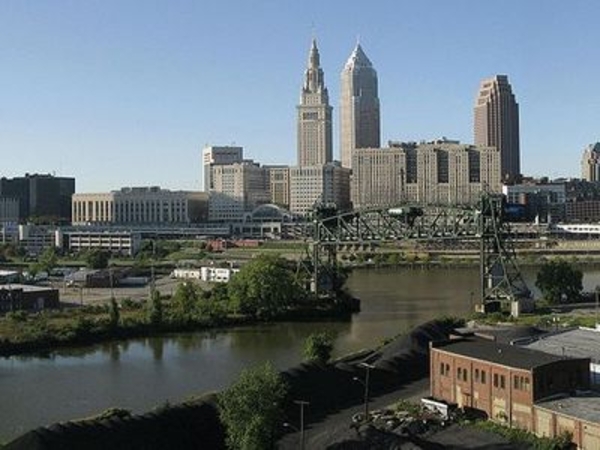
Such optimism reflects the spirit of this city. While outsiders might talk about urban decay, many people who call Cleveland home speak of opportunity here.
The locals' optimism can run headfirst into statistics that suggest despair might be a better gauge of the city's economic mood.
Since the 2000 census, Cleveland has lost 17.1 percent of its population. A good portion of the 81,588 people who left the city found refuge in suburbia. Among those who remain in the city, U.S. Bureau of Labor Statistics puts the unemployment rate at 9.3 percent, a tick or two higher than the statewide figure.
So dire are some forecasts, that Forbes magazine last month put Cleveland on its list of 15 cities where economies are worsening.
City Councilman Zach Reed, however, doesn't quite share that outlook, at least not as it relates to the city at large.
"The overall prospects for the City of Cleveland are good," Reed says. "There are new, vibrant neighborhoods and new construction projects. You see the downtown area gained in population again."
But when Reed looks at the city's black community, he finds a people in crisis. The education system is collapsing around them: poor academic performance, high absentee rates and high dropout rates abound. The school board, strapped now for cash, is poised to lay off 835 teachers and to close seven schools.
The low-performing schools have led to an exodus of well-to-do residents, and so has the city's inability to control crime. The majority of people who have fled cited crime as the No. 1 reason they left, Reed says.
"Most of it is black-on-black crime," he says. "Most of it is people knowing people who are committing the crimes. ... There are a number of things you can do to reduce crime, but we're just not doing it in the African-American community."
Amid the councilman's sobering assessment, the can-do attitude of men and women like Parker flows through the city like the Cuyahoga River. Cleveland might be down on its luck, but it isn't down for the 10 count, says Marsha Mockabee, president and CEO of the Greater Cleveland chapter of the Urban League.
Mockabee, who took the reins of the Urban League last month, can see hints of an urban renaissance. She points to construction projects that dot the city's Central Neighborhood and the Midtown Corridor, the expansion of Cleveland State University and the convention center, construction projects at the Cleveland Clinic and University Hospitals, and the end-of-the-year opening of a downtown casino.
Her goal is piggyback off the National Urban League agenda.
In its annual "State of Black America" report, which is being released Thursday, the national organization is*xpected to stick close to strategies outlined in its 2010 report, which put a spotlight on empowering blacks, fighting social injustice, creating jobs, building business partnerships and stoking economic engines in the black community.
But even a glass-half-full visionary like Mockabee doesn't see this agenda bringing benefits to inner-city Cleveland overnight.
She calls the challenges that await black leadership here and across America the next frontier of the civil rights movement. Leaders will be tasked to find solutions for the disparities in education, in health care and in the judicial system.
None of those issues has an off-the-drugstore-shelf solution. Neither does the most nettlesome problem that the black community confronts: its disparity in economic opportunities - jobs, in other words.
Jobs in Cleveland no longer means factory work. The blue-collar world of this Rust Belt city has hemorrhaged jobs - an estimated 48,000 over the past decade. The city itself is becoming increasingly white collar, which presents challenges to a black community with few hi-tech skills and a dropout rate of 50 percent, Mockabee says.
"Look at how much space Cleveland Clinic has," she says. "Look at the growth of University Hospitals. You don't see large manufacturing plants being built here. You have a medical mart coming to Cleveland. So that's where the puck is going."
The puck won't reach the net for blacks unless they acquire workplace skills. Strong backs that once got them jobs at the Ford and GM plants on the West Side won't land them employment in the medical sector, perhaps the most robust part of the city's economy.
The region and its leadership seem to understand that fact well, says Ellen Burts-Cooper, an instructor at the Weatherhead School of Management and the author of "Don't Just Think Outside the Box, Make the Box Bigger."
Burts-Cooper, who has an MBA and a PhD, calls health care one of the biggest pieces in this region's economic puzzle.
"Cleveland can't rely on the factories and on manufacturing anymore," she says. "Obviously, they're not trying to do that."
Those efforts have put Mockabee and the Urban League on the front lines in the revitalization of the black community. She refuses to paint an unrealistic picture of those efforts, though. Challenges confront the community and its leaders - challenges that go beyond the crippling 16 percent jobless rate among blacks.
Improving those jobless numbers will take resources, she says. Not just the dollars-and-cents kind, but access to training, to quality education, to support systems and to health care itself. Even with those resources, the community wrestles with addictions, with crime, with poverty, with poor schools and with mental illness.
Mockabee sees her mission in much the same way as Burts-Cooper sees the city's mission. Both must think beyond the box.
Through the Urban League, Mockabee is trying to create an entrepreneurial bent in the black community. She doesn't think blacks can afford to wait for a corporate godfather to rush onto the scene and provide jobs. They have to become their own bosses; they have to build and manage their own businesses; they have to do the hiring and not look for somebody else to come in and hire them.
This sounds like an ambitious philosophy for the Urban League to undertake. And it is, Mockabee admits. But the philosophy holds promise for improving the socioeconomic plight of blacks in Cleveland.
"But without resources, it's next to impossible," she says.
Dave Parker, whose family owned a bar on the East Side when he was growing up, had those thoughts in his mind long before he put any of his money into a downtown nightspot. He did his due diligence.
Still, Parker chose to get involved. He attended meetings about downtown revitalization. He met the movers and decision-makers in the city, and he hoarded profits from his maintenance business to invest in a black-centric nightclub with an upscale appeal.
"I was nervous - really nervous," Parker says. "But I was confident that if you give people a nice environment and you make it comfortable for people, they will come."
Now, Xecutive UltraLounge is making a stir on the Internet. The nightclub has a Facebook page, which describes it as sleek and urban-like. It also has word-of-mouth on its side, which should help Parker reach his goal of having as many 50 people working in the club in the near future.
He's excited about his prospects.
"A young businessman can thrive in Cleveland," he says. "One, you have to believe in yourself and in the city. Two, you have to do it the right way."
The Grio
6:02 AM on 03/30/2011
CLEVELAND -- Dave Parker ignored the naysayers. Parker, a 35-year-old entrepreneur, knew he had a good business idea that would work - an idea that would bring a dozen or more jobs to Cleveland. He wasn't about to let anybody deter him from investing in an upscale downtown nightspot.
His Xecutive UltraLounge, which hogs a chunk of Prospect Avenue, opened to raves Friday night. Parker looks at this nightspot as playing a role in the city's revival.
"I see the city moving in a positive direction - business-wise, especially in the downtown area," said Parker, who also owns DLP Enterprise, a maintenance company. "I saw a great opportunity, and I wanted to reinvest in the city of Cleveland."
Such optimism reflects the spirit of this city. While outsiders might talk about urban decay, many people who call Cleveland home speak of opportunity here.
The locals' optimism can run headfirst into statistics that suggest despair might be a better gauge of the city's economic mood.
Since the 2000 census, Cleveland has lost 17.1 percent of its population. A good portion of the 81,588 people who left the city found refuge in suburbia. Among those who remain in the city, U.S. Bureau of Labor Statistics puts the unemployment rate at 9.3 percent, a tick or two higher than the statewide figure.
So dire are some forecasts, that Forbes magazine last month put Cleveland on its list of 15 cities where economies are worsening.
City Councilman Zach Reed, however, doesn't quite share that outlook, at least not as it relates to the city at large.
"The overall prospects for the City of Cleveland are good," Reed says. "There are new, vibrant neighborhoods and new construction projects. You see the downtown area gained in population again."
But when Reed looks at the city's black community, he finds a people in crisis. The education system is collapsing around them: poor academic performance, high absentee rates and high dropout rates abound. The school board, strapped now for cash, is poised to lay off 835 teachers and to close seven schools.
The low-performing schools have led to an exodus of well-to-do residents, and so has the city's inability to control crime. The majority of people who have fled cited crime as the No. 1 reason they left, Reed says.
"Most of it is black-on-black crime," he says. "Most of it is people knowing people who are committing the crimes. ... There are a number of things you can do to reduce crime, but we're just not doing it in the African-American community."
Amid the councilman's sobering assessment, the can-do attitude of men and women like Parker flows through the city like the Cuyahoga River. Cleveland might be down on its luck, but it isn't down for the 10 count, says Marsha Mockabee, president and CEO of the Greater Cleveland chapter of the Urban League.
Mockabee, who took the reins of the Urban League last month, can see hints of an urban renaissance. She points to construction projects that dot the city's Central Neighborhood and the Midtown Corridor, the expansion of Cleveland State University and the convention center, construction projects at the Cleveland Clinic and University Hospitals, and the end-of-the-year opening of a downtown casino.
Her goal is piggyback off the National Urban League agenda.
In its annual "State of Black America" report, which is being released Thursday, the national organization is*xpected to stick close to strategies outlined in its 2010 report, which put a spotlight on empowering blacks, fighting social injustice, creating jobs, building business partnerships and stoking economic engines in the black community.
But even a glass-half-full visionary like Mockabee doesn't see this agenda bringing benefits to inner-city Cleveland overnight.
She calls the challenges that await black leadership here and across America the next frontier of the civil rights movement. Leaders will be tasked to find solutions for the disparities in education, in health care and in the judicial system.
None of those issues has an off-the-drugstore-shelf solution. Neither does the most nettlesome problem that the black community confronts: its disparity in economic opportunities - jobs, in other words.
Jobs in Cleveland no longer means factory work. The blue-collar world of this Rust Belt city has hemorrhaged jobs - an estimated 48,000 over the past decade. The city itself is becoming increasingly white collar, which presents challenges to a black community with few hi-tech skills and a dropout rate of 50 percent, Mockabee says.
"Look at how much space Cleveland Clinic has," she says. "Look at the growth of University Hospitals. You don't see large manufacturing plants being built here. You have a medical mart coming to Cleveland. So that's where the puck is going."
The puck won't reach the net for blacks unless they acquire workplace skills. Strong backs that once got them jobs at the Ford and GM plants on the West Side won't land them employment in the medical sector, perhaps the most robust part of the city's economy.
The region and its leadership seem to understand that fact well, says Ellen Burts-Cooper, an instructor at the Weatherhead School of Management and the author of "Don't Just Think Outside the Box, Make the Box Bigger."
Burts-Cooper, who has an MBA and a PhD, calls health care one of the biggest pieces in this region's economic puzzle.
"Cleveland can't rely on the factories and on manufacturing anymore," she says. "Obviously, they're not trying to do that."
Those efforts have put Mockabee and the Urban League on the front lines in the revitalization of the black community. She refuses to paint an unrealistic picture of those efforts, though. Challenges confront the community and its leaders - challenges that go beyond the crippling 16 percent jobless rate among blacks.
Improving those jobless numbers will take resources, she says. Not just the dollars-and-cents kind, but access to training, to quality education, to support systems and to health care itself. Even with those resources, the community wrestles with addictions, with crime, with poverty, with poor schools and with mental illness.
Mockabee sees her mission in much the same way as Burts-Cooper sees the city's mission. Both must think beyond the box.
Through the Urban League, Mockabee is trying to create an entrepreneurial bent in the black community. She doesn't think blacks can afford to wait for a corporate godfather to rush onto the scene and provide jobs. They have to become their own bosses; they have to build and manage their own businesses; they have to do the hiring and not look for somebody else to come in and hire them.
This sounds like an ambitious philosophy for the Urban League to undertake. And it is, Mockabee admits. But the philosophy holds promise for improving the socioeconomic plight of blacks in Cleveland.
"But without resources, it's next to impossible," she says.
Dave Parker, whose family owned a bar on the East Side when he was growing up, had those thoughts in his mind long before he put any of his money into a downtown nightspot. He did his due diligence.
Still, Parker chose to get involved. He attended meetings about downtown revitalization. He met the movers and decision-makers in the city, and he hoarded profits from his maintenance business to invest in a black-centric nightclub with an upscale appeal.
"I was nervous - really nervous," Parker says. "But I was confident that if you give people a nice environment and you make it comfortable for people, they will come."
Now, Xecutive UltraLounge is making a stir on the Internet. The nightclub has a Facebook page, which describes it as sleek and urban-like. It also has word-of-mouth on its side, which should help Parker reach his goal of having as many 50 people working in the club in the near future.
He's excited about his prospects.
"A young businessman can thrive in Cleveland," he says. "One, you have to believe in yourself and in the city. Two, you have to do it the right way."