
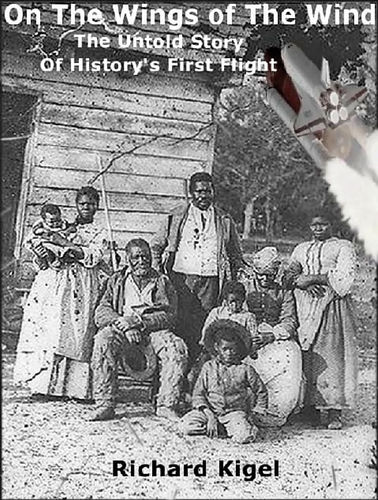
ON THE WINGS OF THE WIND: The Untold Story of History’s First Flight. By Richard Kigel (Part 3)
VIRGINIA, 1857—Now Mose, he was an older fellow. His hair and beard were sprinkled gray and white. Mose looked old. He walked old and talked old. It seemed like he was always old, at least since I knew him. Everyone said he had a case of “the slows.” Every time he moved, it was slow, like he had nothing important to do and no place special to be. Mose, he didn’t hurry for anybody.
I could never figure out why Mose looked so tired and worn since he never went to the fields with us and you hardly saw him break a sweat.
Mose was the fixit man on the farm. He kept his own blacksmith shop, an open cabin with three walls. Most of the tools we used, shovels, hoes, axes, pitchforks and plows, he made. He put together the large wood barrels for holding tobacco. He fashioned our bowls, our spoons, forks, knives. He built tables, chairs, cabinets, sheds and cabins. Anything you wanted Mose could make it.
His main job around here was taking care of the equipment, rickety old plows, cracked wagons and broken tools. If you brought a damaged tool to Mose, he would send it back a couple of days later working like new. We used to say the man could just about bring a dead horse back to life.
When Massa needed someone to put up a door, repair a window, build a shed or a barn, he called on Mose and let him pick his own crew from out of all the slaves. If he called on you, then you worked for Mose that day.
He was a real Jack-at-all-trades—mechanic, carpenter, wheelwright, blacksmith, even a shoemaker. Everybody in the neighborhood knew what Ol’ Mose could do. Massa hired him out all over the county. I expect he worked on every farm within a day’s ride.
Mose was the man responsible for putting up the Big House. It happened well before I came but the slaves still talk about it. They say Mose was king of the hill for the two years it took to put up the Big House. He rode his horse all over the property, directing the slaves and stopping to explain what he wanted done. Mose had to make sure the measurements were right so the posts stood straight and the joists were strong and the windows fit and all the boards were planed smooth. The last thing to go up was the roof and he watched them nailing every shingle to make sure there would be no leak.
They did a mighty fine job on that Big House. When you are standing on the street in town you can look through a clearing in the forest and there, sitting pretty on the top of the distant hill, you can see that fine old house with the mountains in the background.
Uncle Abram was the old man among us, bent with age and infirmity. Years of work broke him down to a shell of a man. He was nearly blind and
his hands were so gnarled from arthritis he couldn’t hold the smallest tool. Uncle Abram didn’t go to the fields anymore. They found work for him around the cabin, pulling weeds, tending the animals, watching the young ones with the women. Abram used to tell everybody he was retired.
Mostly, he’d sit and talk, going on and on about the days when he was a young man in Tennessee. Abram’s master went to war with General Andy Jackson in New Orleans and followed him to Washington when he became President of the United States. Old Uncle Abram believed General Jackson was the very best man he ever heard of. He used to tell us the same Andy Jackson stories time after time but we didn’t mind. We were tolerant of the old man, mindful of all he had gone through. Strange as it may seem, among people with so many stern trials, you won’t find a greater respect for their elders.
Patsey was queen of the field. A fine young woman of twenty three, Patsey was tall and slim and easily the hardest worker on the farm. Nothing could tire her out. She could leap over fences, run with the hounds, plow more rows, pull more tobacco and do it faster than anyone. When it came to putting up a fence she took a back seat to no man. After quitting at night she would have her tools cleaned and put away, her mules fed and watered, all before Uncle Abram found his hat.
Isaac lived with us too. He was a good man, strong and still in his prime. He was the biggest man I ever saw. His hands were wide as shovels and powerful, like they could snap your arm off without half trying. Big as he was, we knew he would never hurt anybody unless he had to. Because of his size, the overseer made him our driver. His job was to keep us on top of our work. You didn’t want Isaac seeing you easing up. Most times he’d just stare at you. You knew he didn’t want to do anything but if we didn’t work he would get the lash himself. So we listened to Isaac and nobody got in trouble.
The new man in our cabin was Waters. He was not much older than me. When his owner died, they auctioned off his slaves. Massa bought Waters and that was how he came to us.
I never heard a man cuss harder than Waters when he got whipped. I’ve heard folks swear they would rather die than utter a single sound, too proud to let their tormentors know they were suffering.
They spit, they cursed, they bit their tongues, they fainted, anything to keep quiet. In the end, almost everyone had to cry out. The whip hurts deeply. It is the literal, unvarnished truth that the crack of the lash and the shrieking of slaves can be heard almost from morning till night.
Waters began howling and bawling and cussing before the cowhide ever touched him. He would be hollering at the top of his lungs, telling them everything he was going to do to Massa and the overseer who at that particular moment was fixing to whip him. The tactic didn’t work at all since he got beat anyway.
After Auntie Bee cleaned him up and doctored his wounds, Isaac took him aside and talked to him gently. “The best thing for us to do is pray,” he told the young man. “I believe the time will come when you and the rest of the children will be free, though we may not live to see it.”
My name is Josiah. I was born into bondage and remained a slave until the age of twelve when I made my flight to freedom. I never knew my mother and I was too young to remember when I came to this tobacco farm in the valley below the Blue Ridge Mountains of Virginia. I do know that from the day I arrived, Auntie Bee took care of me as her own child.
She was the one who taught me the ways of this world and the world to come.
One of my fondest memories is of Auntie Bee sitting me on her knee, sounding the Lord’s Prayer softly in my ear. She would say it slowly, line by line. She had me repeat it back to her until I could say it by myself.
That was the best gift Auntie Bee gave me.
**************************************************************************************
If you are interested in the book, visit: www.synergebooks.com and www.wingsfirstflight.com
I could never figure out why Mose looked so tired and worn since he never went to the fields with us and you hardly saw him break a sweat.
Mose was the fixit man on the farm. He kept his own blacksmith shop, an open cabin with three walls. Most of the tools we used, shovels, hoes, axes, pitchforks and plows, he made. He put together the large wood barrels for holding tobacco. He fashioned our bowls, our spoons, forks, knives. He built tables, chairs, cabinets, sheds and cabins. Anything you wanted Mose could make it.
His main job around here was taking care of the equipment, rickety old plows, cracked wagons and broken tools. If you brought a damaged tool to Mose, he would send it back a couple of days later working like new. We used to say the man could just about bring a dead horse back to life.
When Massa needed someone to put up a door, repair a window, build a shed or a barn, he called on Mose and let him pick his own crew from out of all the slaves. If he called on you, then you worked for Mose that day.
He was a real Jack-at-all-trades—mechanic, carpenter, wheelwright, blacksmith, even a shoemaker. Everybody in the neighborhood knew what Ol’ Mose could do. Massa hired him out all over the county. I expect he worked on every farm within a day’s ride.
Mose was the man responsible for putting up the Big House. It happened well before I came but the slaves still talk about it. They say Mose was king of the hill for the two years it took to put up the Big House. He rode his horse all over the property, directing the slaves and stopping to explain what he wanted done. Mose had to make sure the measurements were right so the posts stood straight and the joists were strong and the windows fit and all the boards were planed smooth. The last thing to go up was the roof and he watched them nailing every shingle to make sure there would be no leak.
They did a mighty fine job on that Big House. When you are standing on the street in town you can look through a clearing in the forest and there, sitting pretty on the top of the distant hill, you can see that fine old house with the mountains in the background.
Uncle Abram was the old man among us, bent with age and infirmity. Years of work broke him down to a shell of a man. He was nearly blind and
his hands were so gnarled from arthritis he couldn’t hold the smallest tool. Uncle Abram didn’t go to the fields anymore. They found work for him around the cabin, pulling weeds, tending the animals, watching the young ones with the women. Abram used to tell everybody he was retired.
Mostly, he’d sit and talk, going on and on about the days when he was a young man in Tennessee. Abram’s master went to war with General Andy Jackson in New Orleans and followed him to Washington when he became President of the United States. Old Uncle Abram believed General Jackson was the very best man he ever heard of. He used to tell us the same Andy Jackson stories time after time but we didn’t mind. We were tolerant of the old man, mindful of all he had gone through. Strange as it may seem, among people with so many stern trials, you won’t find a greater respect for their elders.
Patsey was queen of the field. A fine young woman of twenty three, Patsey was tall and slim and easily the hardest worker on the farm. Nothing could tire her out. She could leap over fences, run with the hounds, plow more rows, pull more tobacco and do it faster than anyone. When it came to putting up a fence she took a back seat to no man. After quitting at night she would have her tools cleaned and put away, her mules fed and watered, all before Uncle Abram found his hat.
Isaac lived with us too. He was a good man, strong and still in his prime. He was the biggest man I ever saw. His hands were wide as shovels and powerful, like they could snap your arm off without half trying. Big as he was, we knew he would never hurt anybody unless he had to. Because of his size, the overseer made him our driver. His job was to keep us on top of our work. You didn’t want Isaac seeing you easing up. Most times he’d just stare at you. You knew he didn’t want to do anything but if we didn’t work he would get the lash himself. So we listened to Isaac and nobody got in trouble.
The new man in our cabin was Waters. He was not much older than me. When his owner died, they auctioned off his slaves. Massa bought Waters and that was how he came to us.
I never heard a man cuss harder than Waters when he got whipped. I’ve heard folks swear they would rather die than utter a single sound, too proud to let their tormentors know they were suffering.
They spit, they cursed, they bit their tongues, they fainted, anything to keep quiet. In the end, almost everyone had to cry out. The whip hurts deeply. It is the literal, unvarnished truth that the crack of the lash and the shrieking of slaves can be heard almost from morning till night.
Waters began howling and bawling and cussing before the cowhide ever touched him. He would be hollering at the top of his lungs, telling them everything he was going to do to Massa and the overseer who at that particular moment was fixing to whip him. The tactic didn’t work at all since he got beat anyway.
After Auntie Bee cleaned him up and doctored his wounds, Isaac took him aside and talked to him gently. “The best thing for us to do is pray,” he told the young man. “I believe the time will come when you and the rest of the children will be free, though we may not live to see it.”
My name is Josiah. I was born into bondage and remained a slave until the age of twelve when I made my flight to freedom. I never knew my mother and I was too young to remember when I came to this tobacco farm in the valley below the Blue Ridge Mountains of Virginia. I do know that from the day I arrived, Auntie Bee took care of me as her own child.
She was the one who taught me the ways of this world and the world to come.
One of my fondest memories is of Auntie Bee sitting me on her knee, sounding the Lord’s Prayer softly in my ear. She would say it slowly, line by line. She had me repeat it back to her until I could say it by myself.
That was the best gift Auntie Bee gave me.
**************************************************************************************
If you are interested in the book, visit: www.synergebooks.com and www.wingsfirstflight.com



READER REVIEW: “The story line was easy to follow and the characters leaped from the pages. Their lives were so interesting to me! This book is beautifully written and its message is subliminal yet powerful. The author's research on slavery is impressive and I think that he has really captured the thoughts and feelings of slavery that are very deep and hopeful. I can feel the author's deepest passions as they flow throughout the pages. I hope he will share more, and I hope his plea is read, heard and acted upon; much more than just being read. Overall it is one of the most phenomenal books I've ever read.”
~Siebra Muhammad, New Orleans, Louisiana