The Republican Party has some potentially winning themes for America’s presidential and congressional elections in November. Americans have long been skeptical of government, with a tradition of resistance to perceived government overreach that extends back to their country’s founding years. This tradition has bequeathed to today’s Americans a related rejection of public subsidies and a cultural aversion to “dependence” on state support.
But Republican presidential candidate Mitt Romney and other leading members of his party have played these cards completely wrong in this election cycle. Romney is apparently taken with the idea that many Americans, the so-called 47 percnet, do not pay federal income tax. He believes that they view themselves as “victims” and have become “dependent” on the government.
But this misses two obvious points. First, most of the 47 percent pay a great deal of tax on their earnings, property, and goods purchased. They also work hard to make a living in a country in which median household income has declined to a level last seen in the mid-1990s.
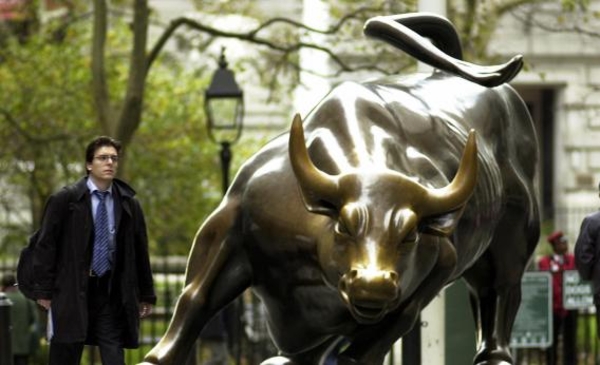
Second, the really big subsidies in modern America flow to a part of its financial elite: the privileged few who are in charge of the biggest firms on Wall Street.
Seen in broad historical perspective, this is not such an unusual situation. In their recent best-selling economic history, Why Nations Fail, Daron Acemoglu and James Robinson cite many past and current cases in which powerful individuals attain control over the state and use this power to enrich themselves.
In many preindustrial societies, for example, control over the state was the best way to assure wealth. And, in many developing countries endowed with valuable natural resources, fighting to gain control of the government has proved a very attractive strategy. (I have worked with Acemoglu and Robinson on related issues, though I was not involved in writing the book.)
The traditional mechanism of state capture in much of the world is violence. But that is not true in the United States. Nor is it the case that U.S. government officials are typically bribed in an open fashion (though there have been some prominent exceptions).
Instead, special interests compete for influence through campaign contributions and other forms of political donations. They also run large, sophisticated media campaigns aimed at persuading policymakers and the public that what is good for their special interest is good for the country.
No one has succeeded in the modern American political game like the biggest banks on Wall Street, which lobbied for deregulation during the three decades prior to the crisis of 2008, and then pushed back effectively against almost all dimensions of financial reform.
Their success has paid off handsomely. The top executives at 14 leading financial firms received cash compensation (as salary, bonus, and/or stock options exercised) totaling roughly $2.5 billion in from 2000 to 2008, with five individuals alone receiving $2 billion.
But these masters of the universe did not earn that money without massive government assistance. By being perceived as “too big to fail,” their banks benefit from a government backstop or downside guarantee. They can take on more risk—running a more highly leveraged business with less shareholder capital. They get bigger returns when things go well and receive state support when fortune turns against them: heads they win, tails we lose.
And the losses are colossal. According to a recent report on the aftermath of the 2008 crisis, prepared by Better Markets, an advocacy group that pushes for stronger financial reforms, the cost to the U.S. economy of the financial crisis—caused by financial institutions’ reckless risk-taking—amounts to at least $12.8 trillion. A big part of this cost has come in the form of jobs lost and lives derailed for the bottom 47 percent of the American income distribution.
Jon Huntsman, the former Utah governor and GOP presidential candidate, addressed this issue clearly and repeatedly in his unsuccessful bid to win his party’s. Force the banks to break up, he argued, in order to cut off their subsidies. Make these financial institutions small enough and simple enough to fail—then let the market decide which of them should sink or swim.
That is an argument around which all conservatives should be able to rally. After all, the emergence of global megabanks was not a market outcome; these banks are government-sponsored and subsidized enterprises, propped up by taxpayers. (This is as true in Europe today as it is in the United States.)
Romney is right to raise the issue of subsidies, but he badly misstates what has happened in the United States during the last four years. The big, nontransparent, and dangerous subsidies are off-budget, contingent liabilities generated by government support for too-big-to-fail financial institutions. These subsidies do not appear in any annual appropriation, and they are not well measured by the government, which is part of what makes them so appealing to the big banks and so damaging to everyone else.
If only Romney had turned popular disdain for subsidies against the global megabanks, he would now be coasting into the White House. Instead, by going after the hard-pressed 47—the very people who have been hurt the most by reckless bank behavior—his prospect of victory in November has been severely damaged.
 Posted By: DAVID JOHNSON
Friday, September 21st 2012 at 11:10PM
You can also
click
here to view all posts by this author...