

The Assassination of Dr. Martin Luther King, Jr.
The Assassination of Dr. Martin Luther King, Jr.
By Hasan Kwame Jeffries
On April 4, 1968, at 6:01 pm, James Earl Ray, a white drifter and petty criminal, raised a bathroom window at the rear of Bessie Brewer’s Rooming House on South Main Street in Memphis, TN and aimed a Remington Model 760 rifle across the street at the Lorraine Motel. When he saw Dr. Martin Luther King, Jr. step onto the balcony of room 306, he pulled the trigger. A fraction of a second later, a single .30 caliber bullet from his weapon struck the civil rights leader in the head. At 7:05 pm, doctors at St. Joseph’s Hospital pronounced Dr. King dead. He was 39.
As word of the tragedy spread throughout Memphis, a pall of shock and sadness blanketed the black community. Anguish soon turned to anger. Fearing a riot, the Memphis police went on high alert. But calm prevailed. Local civil rights activists, who for the past two months had been leading a full-scale grassroots mobilization to support striking black sanitation workers, channeled raw emotions into peaceful marches and public remembrances.
Nonviolence, however, did not win out everywhere. 172 American cities exploded in the days following Dr. King’s assassination. In communities large and small, stretching from the East Coast to the West, African Americans poured into the streets to vent their rage. In almost every instance, they targeted local symbols of white supremacy. In Washington, D.C., which experienced some of the worst unrest, African Americans torched white owned businesses and clashed with police.
READ MORE: The Assassination of Dr. Martin Luther King, Jr. https://origins.osu.edu/milestones/april-2...
By Hasan Kwame Jeffries
On April 4, 1968, at 6:01 pm, James Earl Ray, a white drifter and petty criminal, raised a bathroom window at the rear of Bessie Brewer’s Rooming House on South Main Street in Memphis, TN and aimed a Remington Model 760 rifle across the street at the Lorraine Motel. When he saw Dr. Martin Luther King, Jr. step onto the balcony of room 306, he pulled the trigger. A fraction of a second later, a single .30 caliber bullet from his weapon struck the civil rights leader in the head. At 7:05 pm, doctors at St. Joseph’s Hospital pronounced Dr. King dead. He was 39.
As word of the tragedy spread throughout Memphis, a pall of shock and sadness blanketed the black community. Anguish soon turned to anger. Fearing a riot, the Memphis police went on high alert. But calm prevailed. Local civil rights activists, who for the past two months had been leading a full-scale grassroots mobilization to support striking black sanitation workers, channeled raw emotions into peaceful marches and public remembrances.
Nonviolence, however, did not win out everywhere. 172 American cities exploded in the days following Dr. King’s assassination. In communities large and small, stretching from the East Coast to the West, African Americans poured into the streets to vent their rage. In almost every instance, they targeted local symbols of white supremacy. In Washington, D.C., which experienced some of the worst unrest, African Americans torched white owned businesses and clashed with police.
READ MORE: The Assassination of Dr. Martin Luther King, Jr. https://origins.osu.edu/milestones/april-2...

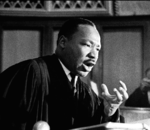


Although Dr. King had fallen out of favor with many African Americans who felt that nonviolence had run its course both tactically and philosophically, they still respected him. They may have disagreed with his approach, but they admired his commitment to social change.