“Shall we now end the war and not eradicate the cause?” the general wrote to a friend in August. “Will not God demand this of us now [that] he has taken away all excuse for not pursuing the right?” (During the rest of the war, Butler’s support for black civil rights — and harsh treatment of rebel sympathizers — made him hated throughout most of the South, where he won the nickname Beast Butler.)
More and more people had begun to share Butler’s conviction that the fugitives at Monroe stood in the vanguard of a larger revolution. “I have watched them with deep interest, as they filed off to their work, or labored steadily through the long, hot day,” a Northern visitor to the fort wrote. “Somehow there was to my eye a weird, solemn aspect to them, as they walked slowly along, as if they, the victims, had become the judges in this awful contest, or as if they were . . . spinning, unknown to all, the destinies of the great Republic.”
Earthshaking events are sometimes set in motion by small decisions. Perhaps the most famous example was when Rosa Parks boarded a segregated bus in Montgomery, Ala. More recently, a Tunisian fruit vendor’s refusal to pay a bribe set off a revolution that continues to sweep across the Arab world. But in some ways, the moment most like the flight of fugitive slaves to Fort Monroe came two decades ago, when a minor East German bureaucratic foul-up loosed a tide of liberation across half of Europe. On the evening of Nov. 9, 1989, a tumultuous throng of people pressed against the Berlin Wall at Checkpoint Charlie, in response to an erroneous announcement that the ban on travel to the West would be lifted immediately. The captain in charge of the befuddled East German border guards dialed and redialed headquarters to find some higher-up who could give him definitive orders. None could. He put the phone down and stood still for a moment, pondering. “Perhaps he came to his own decision,” Michael Meyer of Newsweek would write. “Whatever the case, at 11:17 p.m. precisely, he shrugged his shoulders, as if to say, ‘Why not?’ . . . ‘Alles auf!’ he ordered. ‘Open ’em up,’ and the gates swung wide.”
The Iron Curtain did not unravel at that moment, but that night the possibility of cautious, incremental change ceased to exist, if it had ever really existed at all. The wall fell because of those thousands of pressing bodies, and because of that border guard’s shrug.
In the very first months of the Civil War — after Baker, Mallory and Townsend breached their own wall, and Butler shrugged — slavery’s iron curtain began falling all across the South. Lincoln’s secretaries John Hay and John Nicolay, in their biography of the president, would say of the three slaves’ escape, “Out of this incident seems to have grown one of the most sudden and important revolutions in popular thought which took place during the whole war.”
Within weeks after the first contrabands’ arrival at Fort Monroe, slaves were reported flocking to the Union lines just about anywhere there were Union lines: in Northern Virginia, on the Mississippi, in Florida. It is unclear how many of these escapees knew of Butler’s decision, but probably quite a few did. Edward Pierce, a Union soldier who worked closely with the contrabands, marveled at “the mysterious spiritual telegraph which runs through the slave population,” though he most likely exaggerated just a bit when he continued, “Proclaim an edict of emancipation in the hearing of a single slave on the Potomac, and in a few days it will be known by his brethren on the gulf.”
In August, Lincoln’s War Department tried to bring some clarity to the chaos by asking Union commanders to collect detailed information on each fugitive: not just name and physical description but “the name and the character, as loyal or disloyal, of the master” — since whether the master supported the Union or the Confederacy was, of course, essential to determining whether the particular man or woman counted as legitimate contraband. Such a system would let the federal government assure slaveholders that their “rights” were protected, and possibly return the slaves to their proper owners once the rebel states had rejoined the Union.
But how were officers supposed to tell whether a master they had never laid eyes on was loyal or disloyal — even assuming that the slave was telling the truth in identifying him? Besides, didn’t the military have more pressing business at the moment, like fighting the war? The new contraband doctrine was utterly unenforceable almost from the moment it was devised, but it became hugely influential precisely because it was so unenforceable: it did not open the floodgates in theory, but it did so in practice.
And it did so with very little political risk to the Lincoln administration. Indeed, preposterous as the contraband doctrine was as a piece of law, it was also — albeit inadvertently — a masterstroke of politics; indeed, it satisfied nearly every potential theoretical and political objection while being completely unworkable in the long run. “There is often great virtue in such technical phrases in shaping public opinion,” Pierce observed. “The venerable gentleman, who wears gold spectacles and reads a conservative daily, prefers confiscation to emancipation. He is reluctant to have slaves declared freemen but has no objection to their being declared contrabands.”
The system was eminently practical in other terms. Regiments needed labor: extra hands to cook meals, wash clothes and dig latrines. When black men and women were willing to do these things, whites were happy not to ask inconvenient questions - not the first or the last time that the allure of cheap labor would trump political principles in America.
Blacks were contributing to the Union cause in larger ways. Not just at Fort Monroe but also throughout the South they provided Northerners with valuable intelligence and expert guidance. When Lincoln’s master spy, Allan Pinkerton, traveled undercover through the Confederacy, he wrote, “My best source of information was the colored men. . . . I mingled freely with them, and found them ever ready to answer questions and to furnish me with every fact which I desired to possess.” They were often the only friends the Yankees encountered as they groped their way anxiously through hostile territory.
Just as influential was what did not happen: the terrible moment — long feared among whites — when slaves would rise up and slaughter their masters. It soon became apparent from the behavior of the contrabands that the vast majority of slaves did not want vengeance: they simply wanted to be free and to enjoy the same rights and opportunities as other Americans. Many were even ready to share in the hardships and dangers of the war. Millions of white Americans realized they did not actually have to fear a bloodbath if the slaves were suddenly set free. This awareness in itself was a revolution.
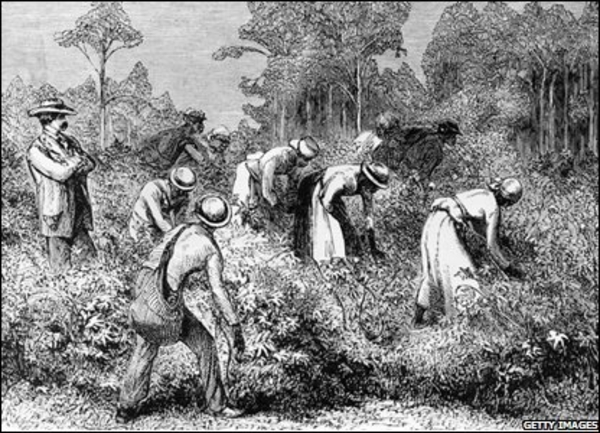
Most important, though, was the revolution in the minds of the slaves themselves. Within little more than a year, the stream of a few hundred contrabands at Fort Monroe became a river of tens — probably even hundreds — of thousands. They “flocked in vast numbers — an army in themselves — to the camps of the Yankees,” a Union chaplain wrote. “The arrival among us of these hordes was like the oncoming of cities.”
When Lincoln finally unveiled the Emancipation Proclamation in the fall of 1862, he framed it in Butleresque terms, not as a humanitarian gesture but as a stratagem of war.On the September day of Lincoln’s edict, a Union colonel ran into William Seward, the president’s canny secretary of state, on the street in Washington and took the opportunity to congratulate him on the administration’s epochal act.
Seward snorted. “Yes,” he said, “we have let off a puff of wind over an accomplished fact.”
“What do you mean, Mr. Seward?” the officer asked.
“I mean,” the secretary replied, “that the Emancipation Proclamation was uttered in the first gun fired at Sumter, and we have been the last to hear it.”
This article is adapted from “1861: The Civil War Awakening,” by Adam Goodheart
as posted by The New York Times
Part 1 - Click Here Part 2 - Click Here
 Posted By: Reginald Culpepper
Thursday, April 7th 2011 at 12:40AM
You can also
click
here to view all posts by this author...