WASHINGTON -- Despite stiff opposition and 13 years of failed efforts, a group is continuing to press the federal government to pay trillions of dollars to blacks to compensate them for what it calls the lingering effects of slavery.
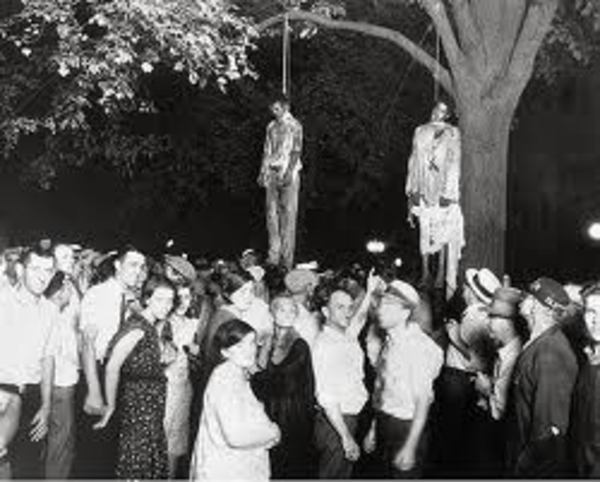
The National Coalition of Blacks for Reparations in America points as the basis for its demand to the nearly 250 years of the American slave trade and the continuing treatment of blacks as second-class citizens. This inferior regard includes a criminal justice system that targets blacks for harsher penalties and a corporate America that pays blacks less than their white colleagues, said the organization, which goes by the acronym N'COBRA.
The Washington D.C.-based group contends that the federal government owes about $8 trillion to the descendants of slaves.
The 13-year-old coalition, which has been largely muffled in Washington amid the din of larger, better-financed lobbying groups, plans to raise its profile beginning today with a seven-day conference in the nation's capital and a rally on the National Mall this weekend.
Despite what the coalition calls newfound momentum for its cause, the likelihood that Congress will approve any reparations money -- let alone $8 trillion -- appears slim. Federal lawmakers have not even acted on a relatively benign piece of legislation that calls for the creation of a seven-member commission simply to study the issue of compensating descendants of slaves. The measure, sponsored by Rep. John Conyers Jr., D-Mich., has languished in the House for 11 years.
But supporters of the movement are buoyed by the support of Randall Robinson, who as president of TransAfrica Forum helped lead a successful international call for the end of apartheid in South Africa. His recently published book, The Debt: What America Owes to Blacks, is a call for descendants of slaves to be compensated.
The group's effort to gain reparations also has had recent success in Dallas, Chicago, Detroit, Cleveland and Washington, where city councils have passed nonbinding resolutions calling on Congress to provide reparations.
"It is for the memories of our ancestors, the quality of the lives of the living and the destiny of the still unborn that we work diligently to close this chapter of history in a just way, giving voice not only to the wrong but to the remedy," the coalition says in a mission statement.
Robinson said the federal government has an obligation to compensate the descendants of slavery.
"The United States government sanctioned violations of the human rights of African Americans with the imprimatur of law," Robinson said, noting that slavery was legal until 1865. "In order to redress the injury, the United States government must provide a fair forum for redress and pay the debt it owes to African Americans."
Robinson added that he does not hold living white Americans responsible for slavery, noting that none has legally kept slaves and most abhor that the practice ever existed. However, the government should be held liable for the slave trade, even 135 years after it was outlawed with the ratification of the Constitution's 13th Amendment.
"It's not too late" to be compensated, Robinson said. "It is neither too late in the sense that the claim of reparations for African Americans is stale, nor is it too late in the sense that there is no one or nothing left to compensate. It is never too late to seek justice."
But opponents of the group's call, while decrying the horrors of slavery, counter that blacks today are too far removed from the slave era to warrant compensation. They also argue that the group's focus on trying to right the wrongs of slavery detracts from the contemporary problems facing blacks in many cases, such as poor schools and housing discrimination.
The coalition, in defense of its request for compensation, noted that the federal government in 1988 issued a formal apology and paid $20,000 each to Japanese-Americans taken from their homes and held in internment camps during World War II from 1941 to 1945. Descendants of the centuries-old American slave trade, which flourished from 1619 to 1865, are as deserving of compensation, the group said.
Not so, countered Stanford University professor Clayborne Carson.
The Japanese-Americans compensated under the 1988 Civil Liberties Act were people who actually suffered the indignity of being uprooted in the name of national security following Japan's 1941 bombing of Pearl Harbor. But the slave descendants seeking recompense are many generations removed from their relatives who toiled under the lash, the U.S. history professor said.
Rather than focusing on the distant past, the well-intentioned people seeking reparations should strive to remedy the problems that continue to plague black communities, Carson said.
"What about getting reparation for the poor education, the poor housing, the discrimination that's happening right at the moment," he said. "A terrible wrong was done, but it's not to me a moral or ethical question of righting a wrong: What is the best way of resolving the present-day problems of black people?"
So far the opponents of compensation have prevailed.
And President Clinton has rejected calls that he formally apologize to the descendants for the government's preservation of slavery as a legal institution from colonial days until ratification of the 13th Amendment. He did express regret, during a trip to Africa in 1998, for U.S. involvement in the slave trade that emanated from that continent.
Critics of his refusal to apologize to the descendants say Clinton fears such a statement would add fuel to the reparations movement. But White House spokeswoman Elizabeth Newman denied the allegation, saying the president has worked hard to enforce civil rights laws and eradicate persistent discrimination against all races.
Dorothy Benton Lewis, the coalition's co-chair, said the 4,000-member organization remains "undaunted" by its lack of success in securing reparations.
"You have to do what you have to do, no matter how long it takes," she said.
Lewis said she did not know how many descendants would be eligible for compensation, adding that the calculation of beneficiaries would require more careful study, perhaps by a congressionally delegated commission.
At the conclusion of its conference June 20, the coalition said it intends to file a lawsuit against the federal government to recover compensation for descendants of slaves.
 Posted By: DAVID JOHNSON
Saturday, May 26th 2012 at 11:52PM
You can also
click
here to view all posts by this author...