Home > Blogs > Post Content
|
|
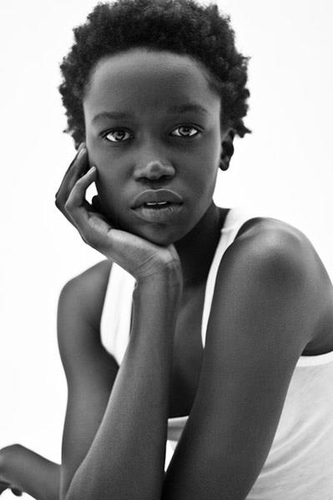
The term black people is an everyday English-language phrase, often used in North America to refer to Americans and Canadians of Sub-Saharan African descent.[1][2] Outside North America, the term "black people", or close translations of it, is also used in other socially based systems of racial classification, or of ethnicity for persons who are perceived to be dark-skinned relative to other "racial" groups – or else who are defined as belonging to a 'black' ethnicity. Different societies, such as Britain, Brazil, the United States, Australia and South Africa apply differing criteria regarding who is classified as "black", and these have also varied over time. Often social variables, such as class and socio-economic status, affect classification, so that relatively dark-skinned people can be classified as white if they fulfill other social criteria of "whiteness," and relatively light-skinned people can be classified as black if they fulfill the social criteria for "blackness" in a particular setting.[3] As a result, in North America, for example, the term "black people" is not necessarily an indicator of skin color but of a socially based racial classification related to being African American, with a family history related to institutionalized slavery.[4][5] In other regions, such as Australia and Melanesia, the term 'black' has been applied to, and used by populations with a very different history.
 Posted By: DAVID JOHNSON
Saturday, January 12th 2013 at 1:55AM
You can also
click
here to view all posts by this author...
|
|
|
In the first 200 years that black people were in the United States, they commonly referred to themselves as Africans. In Africa, people primarily identified themselves by ethnic group (closely allied to language) and not by skin color. Individuals identified as Ashanti, Igbo, Bakongo or Wolof. But when Africans were brought to the Americas, they were often combined with other groups from Africa and individual ethnic affiliations were not generally acknowledged by English colonists. In areas of the Upper South, different ethnic groups were brought together. This is significant as Africans came from a vast geographic region, the West African coastline stretching from Senegal to Angola and in some cases from the south east coast such as Mozambique. A new identity and culture was born that incorporated elements of the various ethnic groups and of European cultural heritage, resulting in fusions such as the Black church and Black English. This new identity was based on African ancestry and slave status rather than any one ethnic group.[6] By contrast, slave records from Louisiana show that the French and Spanish colonists recorded more complete identities of Africans, including ethnicities and given tribal names.[7]
The US racial or ethnic classification 'black' refers to people with all possible kinds of skin pigmentation from the darkest through to the very lightest skin colors, including albinos, if they are believed by others to have African ancestry, or to exhibit cultural traits associated with being "African American". As a result, in the United States the term "black people" is not an indicator of skin color but of socially based racial classification.[8] Relatively dark-skinned people can be classified as white if they fulfill other social criteria of "whiteness" and relatively light-skinned people can be classified as black if they fulfill the social criteria for "blackness" in a particular setting.[9]
In March 1807, Great Britain, which largely controlled the Atlantic, declared the transatlantic slave trade illegal, as did the United States. (The latter prohibition took effect 1 January 1808, the earliest date on which Congress had the power to do so after protecting the slave trade under Article I, Section 9 of the United States Constitution.)
By that time, the majority of black people in the United States were native born, so the use of the term "African" became problematic. Though initially a source of pride, many blacks feared the use of African as an identity would be a hindrance to their fight for full citizenship in the US. They also felt that it would give ammunition to those who were advocating repatriating black people back to Africa. In 1835 black leaders called upon black Americans to remove the title of "African" from their institutions and replace it with "Negro" or "Colored American". A few institutions chose to keep their historic names, such as the African Methodist Episcopal Church. African Americans popularly used the terms "Negro" or "colored" for themselves until the late 1960s.[10]
The term black was used throughout but not frequently, as it carried a certain stigma. In his 1963 "I Have a Dream" speech,[11] Martin Luther King, Jr. uses the terms negro fifteen times and black four times. Each time he uses black it is in parallel construction with white, for example, "black men and white men".[12]
With the successes of the civil rights movement, a new term was needed to break from the past and help shed the reminders of legalized discrimination. In place of Negro, activists promoted the use of black as standing for racial pride, militancy and power. Some of the turning points included the use of the term "Black Power" by Kwame Toure (Stokely Carmichael) and the popular singer James Brown's song "Say It Loud - I'm Black and I'm Proud".
Saturday, January 12th 2013 at 1:56AM
DAVID JOHNSON
|
 |
@DAVID...YOU HAVE HEARD THE EXPRESSION, "THE MISAS TOUCH' AS IN EVERY THING ONE TOUCHS TURNS INTO PURE GOLD...WELL WITH EACH POSTINGS RELATED TO OUR BIAHISTORY, YOU KING DAVID STRIKES BIAHISTORY GOLD. example,
stokley carmichael went to south africa and the walls of arphtide began to come down. looooooooooooooooooooooooooooooooooooooooool (smile)
Thursday, April 10th 2014 at 6:47PM
ROBINSON IRMA
|
Blogs Home
|
|
|