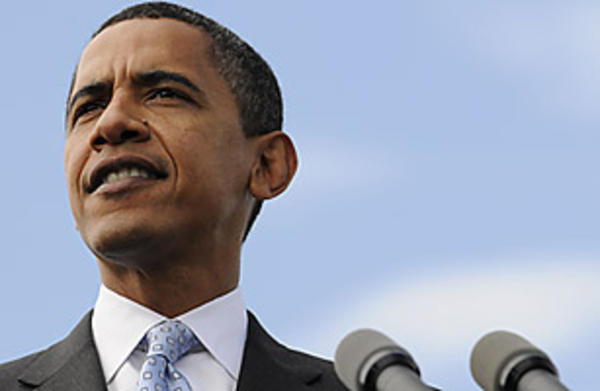
On Tuesday, January 20th, President Barack Obama encouraged Americans to pick themselves up, dust themselves off, and begin again the work of remaking America. These words came from a bi-racial American who transcended personal trials and tribulations to become this nation’s 44th President, the leader of the Free World. But as I listened to President Obama’s inaugural address, I wondered how messages about his change movement are going to be communicated from this point forward to the international community.
A survey of America’s historical roots reveals that communications professionals are being paid big bucks to frame messages that prompt a desired response. Most of these messaging campaigns are designed to get people to purchase a product or service, others to support a cause. But if you listen to the undertones of President Obama’s message, you will be enlightened to his call to help him restore the bonds of peace and tranquility.
President Barack Obama antics have mirrored the ones being displayed by communications professionals. He wants us to advance his change movement, which, during his bid for the American presidency was billed as “Change We Can Believe In.” But I’m here to tell you that we will never be able to believe in this change if communications professionals aren’t committed to conceiving reports that 1) spotlight the people, places and things that are in need of change, 2) identify barriers to change, and 3) offer a prescription for bringing about change.
One change that most Americans have been anticipating is an end to the Iraqi and Afghan wars. The news media has done a great job covering these wars, but it continues to offer a lopsided view of their impact on Iraqi and Afghan citizens. During George W. Bush’s administration, reports from the news media had us believing that all members of the Islamic faith are radical extremists, terrorists even. Consequently, many of us find ourselves going through life believing our occupation of these countries is justified.
But what would happen if we had heard more from Iraqi and Afghan citizens? Would we continue to harbor this belief? Probably not. We would be privy to both sides of the story. And, as a result, we would be enlightened to the thoughts and feelings that are driving some Middle Easterner’s behaviors toward America and the West. Moreover, the shared testimonies of Iraqi and Afghan citizens would reduce us to tears because we would finally begin to understand what it means to live in a country whose landscape is being devastated by constant bombing from Allied Forces and known terrorists.
Don’t get me wrong. I do believe that governments have an obligation to protect law-abiding citizens from individuals who wish to do them harm. But there comes a time when our leaders have to evaluate the situation, decide if it makes sense to sit down with our enemies. If the decision is made to meet, then representatives from both sides should be asking, “What has our contribution been to the escalation of this conflict?” Afterwards, they should work together to lay down the foundation for the restoration of peace.
We communications professionals could be doing more to encourage leaders from both sides to take a seat at the table. The view of the world that we provide through our written and spoken words has the power to impress upon these leaders the true will of the people. This true will has nothing to do with wars, everything to do with peace. But like the cigarette industry, which makes boat loads of money through a blatant disregard for consumers’ health, we go on communicating what we think the world’s citizenry wants to hear and see rather than what it needs to hear and see.
What do you think? I look forward to reading your responses.
Jeffery A. Faulkerson, MSSW
www.jefferyafaulkerson.com Note: Originally posted on January 23, 2008 to THE PURPOSEFUL WRITER (http://purposefulwriter.blogspot.com/) by Jeffery A. Faulkerson, MSSW
Posted By: J. A. Faulkerson
Friday, January 23rd 2009 at 5:17PM
You can also
click
here to view all posts by this author...