During these times of financial crisis and economic down falls--parents, executives, business owners and even our government continue to search for ways to stay abreast during these odd times in America. As people are loosing their homes, 401 K's and even the ability to pay even the smallest bills in order to keep a roof over their heads the stress of bills, bills, bills continue to build up for many without the full understanding of paying every bill before the interest and late charges come racking in making it even harder to pay the bills in full. But in such harsh times hear in America how do we educate ourselves to become more economically savvy especially because during our high school years there was never a subject to help us understand the significance of being this way. Most importantly, how do we begin to educate our youth in the department of economics, investments, trade and commerce so that they can understand how important saving to build a heritage and future is and how being prepared for a "Raining Day" will keep them abreast during the storms of economic crisis?
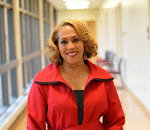
According to many life coaches, poverty is a mindset, however, how do we get rid of such a mindset if our youth are not being taught to think any differently than what the news is telling them, how their parents are living and what they hear other adults say based upon the economic crisis here in America. Are we to push the idea of getting economics incorporated into the everyday curriculum in public schools across America or better yet around the world? If not how are we to help the future leaders of tomorrow deal with the future challenges that are to come? While poverty "The Mindset" amongst the youth is not just a nation wide mindset but an international mindset. Based upon a study done by the Food and Agricultural Organization at least 142 million more people go hungry every day since 1 decade ago. The United Nations Department of Economic and Social Affairs spoke about rethinking how to landscape global poverty in a report released five years ago, but when does the process begin? Educating the youth on such a subject is essential to the future and if we don't start now, the results could be detrimental. Rhonda Parrow, Depaul Graduate student has taken time out to help the youth in financial workshops through out Chicago and finds that the workshops are very beneficial to the youth. Rhonda says "We meet the youth where they are by giving financial literacy workshops, based on the foundation of economics so that they can grow and understand how to make the right choices financially." The most recent financial literacy work shops where Rhonda helped the youth gain financial wisdom was at the The Menomonee Club along with the The Money Smart Week workshop here in Chicago. The Money Smart Week workshop was sponsored by The Federal Reserve Bank of Chicago. If you would like for Rhonda to help connect you with a financial workshop for yourself or your child based on the Money Smart Week standards contact Rhonda Parrow at 312-664-4631 or email her at rhonda_parrow@sbcglobal.net.
For more information on the Money Smart Week Workshop log on to
http://www.chicagofed.org/webpages/educati... Below are a list of ways that we can become more responsible financially for ourselves and our youth in order to build a better economy:
1. Listen or read Think and Grow Rich by Napolean Hill
2. Live from a charity mindset and not a give me mindset "When giving from the heart your shall always receive."
3. Do a google search on The Rockafeller Method and how he taught his children to be financially savvy
4. Involve your children in financial workshops that will help them to save and use at the proper times
5. Log on to
http://www.fsround.org/media/htm10/financi... to find out more about financial literacy month and the events that are taking place nation wide to help build the economy.
6. Log on to
http://www.gagdc.org/calendar.aspx?pointer... to find out more about "Teen Entrepreneurship Programs," and financial education workshops for the summer, right here in Chicago.
7. Log on to
http://savethatpenny.net/cart/index.php?ma... 8. Help children understand the significance of pennies and a piggy bank
9. Help children to earn their keeps with rewards for accomplishments and chores
10. Read a financial literacy book with your child at least twice a week to keep them financially in tune
11. Re-cycle and teach your children how to re-cycle and the significance of re-cycling
 Posted By: Talibah Bakhit
Tuesday, May 18th 2010 at 2:11AM
You can also
click
here to view all posts by this author...