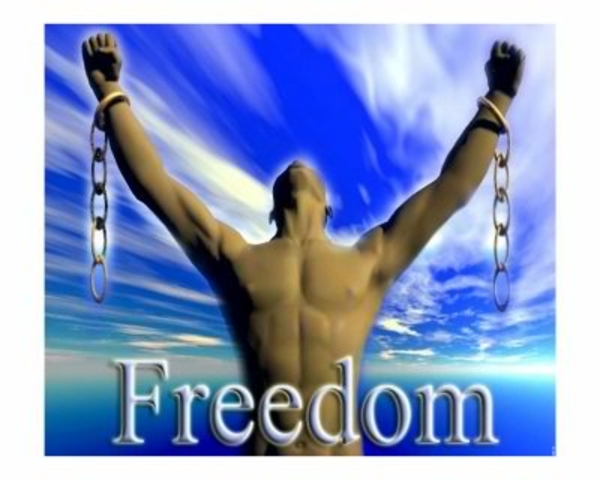
For enslaved people in America, protest against the injustice of chattel Slavery took many forms. Most subtle were the individual acts of resistance against a cruel master or overseer, including theft, sabatoge, feigned sickness, work slowdowns, and escape. The privacy of the slave quarters nurtured a culture of endurance, even defiance, in slave song, folktale, and religion. The most dramatic acts of resistance, however, were the organized conspiracies and rebellions against the system of slavery. They involved careful planning, collective action, and bravery. Indeed, few struggles for individual freedom and human dignity in America have ever entailed more personal risk.
Until well into the twentieth century, historians tended to play down unrest among slaves and to picture insurrections as aberrant. The mythology of the "happy slave" reflected a continuing paternalism in racial attitudes and helped to justify the Jim Crow practices that followed emancipation. Since World War II historians critical of racial injustice approached the issue with a new sympathy to the plight of enslaved people.
More than 250 cases have been identified that can be classified as insurrections. Such numbers are bound to be imprecise. Among the factors thwarting the quest for statistical certainty are the policy of silence, the bias of the records, the difficulty of distinguishing between personal crimes and organized revolts, and the quick spread of rumors. However, it is clear that insurrection was more frequent than earlier historians had acknowledged. According to a unique record of slave convictions in the state of Virginia for the period 1780–1864, of 1,418 convictions, 91 were for insurrection and 346 for murder. When this is added to the several recorded examples of plots and revolts in the state in the seventeenth and early eighteenth centuries, the record for that state alone is impressive.
The first slave revolt in territory now part of the United States took place in 1526 in a Spanish settlement near the mouth of the Pee Dee River in what is now South Carolina. Several slaves rebelled and fled to live with Indians of the area. The following year the colonists left the area without having recaptured the slaves. Insurrection in the British colonies began with the development of slavery and continued into the American Revolution. The most serious occurred in New York and in South Carolina. In 1712 a slave conspiracy in New York City led to the death of nine whites and the wounding of five or six others. Six of the rebels killed themselves to avoid capture. Of those taken into custody, twenty-one were executed in a variety of ways. Some were hanged, others burned, one broken on the wheel, and one hanged in chains as an example to other would-be insurrectionists. In 1739 Cato's Revolt (also known as the Stono Rebellion) took place at Stono, South Carolina, near Charleston. Blacks seized guns and ammunition and fought the militia before being defeated. Approximately twenty-five whites and fifty blacks were killed. In 1741 a conspiracy among slaves and white servants in New York City led to the execution of thirty-one blacks and four whites. These events set a gruesome precedent—the retributions were usually far bloodier than the actual uprisings.
The successful slave revolt in Haiti during the French Revolution led to a series of plots in the South. Others followed up to the Civil War. Of these Gabriel'S Insurrection, the plot of Denmark Vesey, and Nat Turner'S Rebellion were the most significant.
In 1800 Gabriel Prosser, a blacksmith, and Jack Bowler planned a revolt to involve thousands of slaves in the Richmond area. Authorities became aware that something was afoot, and James Monroe, then governor of Virginia, ordered that precautions be taken. Nevertheless, the leaders planned to proceed on Saturday, 30 August. It rained heavily, and when more than a thousand armed slaves gathered, they found that a bridge over which they had to pass had been washed away. On the same day, an informer gave specifics of the plot to authorities. Many rebels were arrested, including Prosser and Bowler. Thirty-six slaves, including the leaders, were executed.
In 1822 Denmark Vesey, a black carpenter who had purchased his freedom in 1800, planned an uprising in the area of Charleston. An active churchgoer in Charleston, Vesey was convinced that slavery violated the principles of the Bible. With able assistance from such leaders as Peter Poyas and Mingo Harth, many slaves over a large area were involved. The plan was to attack Charleston on the second Sunday in July, Sunday being a day on which it was customary for many blacks to be in the city and July being a time when many whites were vacationing outside the city. Weapons were made and information secured as to the location where arms and ammunition were stored. However, betrayal led Vesey to move the date ahead one month; before action could be taken, further information led to the arrest of the leaders. Vesey and thirty-four others were found guilty and hanged.
In August 1831 Nat Turner led the most famous revolt ever in Southampton County, Virginia. Turner and five others, with no clear plan of action, embarked on a killing spree. Turner's marauding army swelled to approximately seventy-five. They killed over seventy whites, many women and children, and caused panic over a wide area. Soldiers defeated the rebels, and Turner, his accomplices, and scores of innocent blacks were executed. The Virginia legislature tightened the slave codes in response. Thereafter, black preachers could not conduct religious services without the presence of a white.
These insurrections involved mainly slaves, with occasional participation by free blacks and rare involvement of whites. Usually the leaders, notably Prosser, Vesey, and Turner, were better educated than their peers. Many rebels were inspired by religious beliefs and borrowed biblical language and imagery to help unify their followers behind the cause. They were also stimulated by factors and events external to the local situation—such as the revolution in Haiti—and each uprising brought a new crop of repressive laws. From Turner's uprising in 1831 through the Civil War, slave owners curtailed slave rebellions by tightening the surveillance over black religion, travel, and expression.
 Posted By: DAVID JOHNSON
Sunday, January 27th 2013 at 10:19PM
You can also
click
here to view all posts by this author...