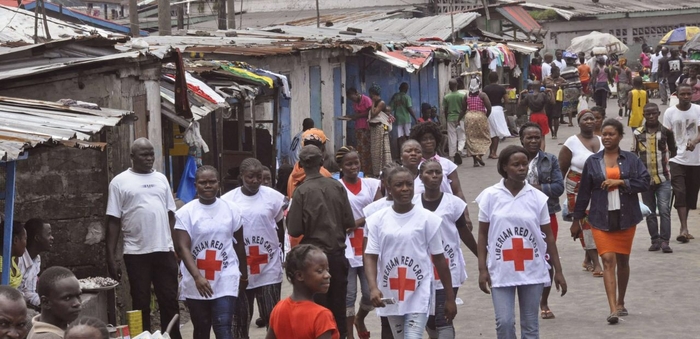
September 2, 2014- The news: Health authorities admitted Tuesday that the Ebola virus epidemic is accelerating quickly and may soon outpace the ability of medical teams to contain it. Meanwhile, the grim situation is being made worse by a massive strike among Liberian health care workers, who have accumulated large amounts of unpaid wages while suffering from overwork and the constant risk of exposure.
"It's spiraling out of control. The situation is bad, and it looks like it's going to get worse quickly," Centers for Disease Control and Prevention director Tom Frieden told NBC News. "There is still a window of opportunity to tamp it down but that window is closing, and we need to act now. ... This is different than every other Ebola situation we've ever had. It's spreading widely, throughout entire countries, through multiple countries, in cities and very fast."
Why is it spreading out of control? Here's what you need to know:
- It's spreading from rural areas to big cities. Ebola virus outbreaks typically originate in rural areas where residents often come into contact with potentially infected wildlife like monkeys or fruit bats. The outbreaks are limited by geographic isolation. With over 3,000 confirmed cases throughout Liberia, Guinea, Sierra Leone, Nigeria and now Senegal, this particular infection has unfortunately spread into urban areas, sparking "low-level panic" in Freetown and other cities. Because Ebola spreads easily in dense, unhygienic environments, poverty-ridden areas of West African metros are particularly at risk.
- The countries with Ebola have been isolated. Frieden told CNN's New Day that restricting air travel to and from the nations suffering the worst of the Ebola epidemic was actually aiding the spread of the disease by making it much more difficult to transport in aid workers, supplies and medical equipment.
"What we're seeing is a spiraling of cases, a hugely fast increase in cases, that's harder and harder to manage," he said. "The more we can get in there and tamp that down, the fewer cases we'll have in the weeks and months to come."
Doctors Without Borders further criticized the international community for ignoring the needs of West African patients, calling the response "lethally inadequate."
- It's hit fragile health care systems and overwhelmed staff. This is the first Ebola outbreak in West Africa, and by far the largest in recorded history. Medical personnel in the countries involved have little to no experience working with Ebola victims; they often work for health care systems that are disastrously underfunded and equipped during the course of regular duties. As a result, some 240 medical workers have caught the disease and half of them died, including Sierra Leone's top expert on the disease and one of Freetown's top physicians.
This talent and manpower cannot be replaced. The WHO claims that Liberia has one doctor for every 100,00 people, while Sierra Leone has just two. What's more, health care workers are beginning to strike thanks to unpaid wages and poor conditions that are exposing them to Ebola.
Read more:
http://mic.com/articles/97814/here-s-why-a...
 Posted By: Jeni Fa
Wednesday, September 3rd 2014 at 4:22PM
You can also
click
here to view all posts by this author...