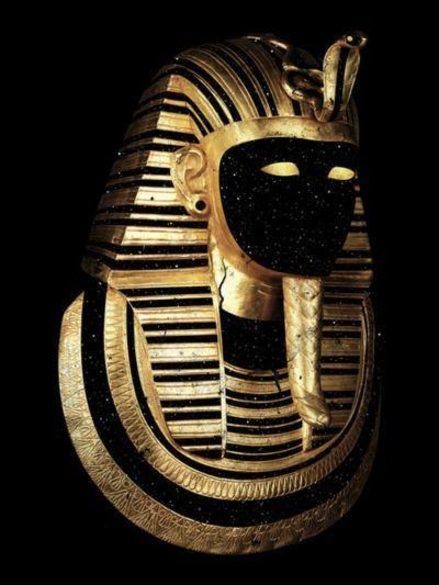
Say the word "Egypt" to most people and ask them to free associate. The first three words out of their mouths will probably be: mummy, pyramids, and hieroglyphics. All three seem to stand out as ciphers, as enticing mysteries. Mummies look so much like humans that it's almost as if you can speak to them. The pyramids, with their unfathomable size, invite you to ask what motivated them. But hieroglyphics, the form that Egyptian writing took, are especially inviting because they seem almost readable. You can identify the symbols, for they are, after all, pictures; so it's almost as if you're always on the verge of understanding them like a memory you know you have but just can't bring to consciousness.
However, the surprising thing about hieroglyphics is that they aren't really pictures at all, but picture letters and syllables (similar to cuneiform). For this reason, the meaning of hieroglyphics faded from human consciousness from about the fourth century AD to the nineteenth century AD, when they were finally deciphered.
Like most forms of writing, hieroglyphics originally began as pictures. The growth of cities and public administration created a need for record-keeping and accounting; the simplest way to record a transaction involved pictures. "Five cows," for instance, can be represented with five marks and a picture of a cow. But, as you can imagine, this type of writing is enormously inefficient (millions of pictures) and sometimes confusing ("Is that a cow or a hippo?" Five hippos?"). So the Egyptians developed a shorthand out of their pictures, in which a picture of a single-syllable word could stand for that syllable whenever it occurs in a word. Let me give you an example in English. Suppose we were to come up with a hieroglyphic system in English similar to Egyptian hieroglyphics. We have a single-syllable word, "cat," which we represent with a picture of a cat. So when we write the word, "catalog," we write the first syllable of the word with a picture of a cat. That's how hieroglyphics work. Simple, right? No. There is a twist. The Egyptians never indicated vowel sounds in their writing, so the picture of a cat actually stands for the syllable "ct." So the word "cut" would also be written by using a picture of a cat, and in the word "recite," the last syllable would also be a picture of a cat. But check this out: the word "react," since the last syllable consists only of the two consonants, "ct," would also be a picture of a cat.
You can see now how difficult it must have been to decipher this mess. Even the Egyptians had problems. For instance, in English the words "recite," "recut," and "react" would be spelled exactly the same way in hieroglyphics (if you spelled the words in English without vowels, the three words would be spelled "rct," "rct," "rct"). So the Egyptians would add a picture at the end of the word to identify the word; "recut," for instance, might be followed by a picture of a knife, "recite" might be followed by a picture of a mouth.
As interesting as all this is, the most important aspect of Egyptian writing was what Egyptians thought of it, that is, how they conceived of writing in their view of the universe. The Egyptians called their writing, medu netcher, or "the words of the gods" ("hieroglyph" is a Greek word which means "sacred writing"). The Egyptians believed that writing was given to them by Thoth, the keeper of records among the gods. But Thoth didn't just give humans writing, he gave them the language of the gods. To write hieroglyphs was to speak "god-language." In other words, the Egyptians believed that the gods "spoke" in pictures and in things. This is a powerfully important insight into the Egyptian world view. If the "words of the gods" are pictures and things, that means that the entire world is a speech by the gods, full of meaning and symbol; this means that the universe itself can be "read." Since Thoth taught humans the "words of the gods," he taught them also how to read and understand the universe itself. Above everything else, understand that for the Egyptian everything in the world and universe was writing that resembled all the human writing they inscribed on their tombs and monuments. For this reason, while Egyptian writing is a form of art, all Egyptian art is a form of writing—it has meaning, symbolism, and precision.
 Posted By: DAVID JOHNSON
Sunday, September 21st 2014 at 3:07PM
You can also
click
here to view all posts by this author...