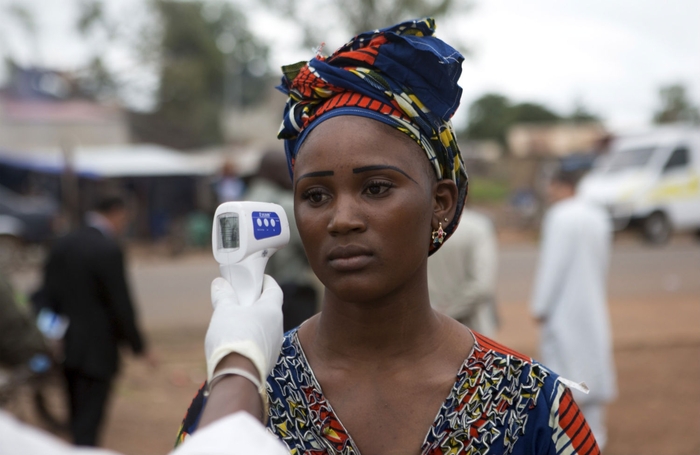
As the body count rises in West Africa and the first patient dies on US soil, Americans can be forgiven for panicking about Ebola. But before we go into lockdown, let's assess the real threat and remember why we have an epidemic in the first place.
Six months ago, Médecins Sans Frontières (Doctors Without Borders), the government of Guinea and some others (myself included) warned of the threat of an unprecedented epidemic. At the time, Ebola had already spread from Guinea to Liberia. Despite our efforts, on April 1, the United Nation's World Health Organization (WHO), ostensibly the world's leading public-health institution, insisted that the Ebola outbreak was neither an epidemic nor unprecedented.
On August 8, after months of denial (and the infection and evacuation of two American medics), WHO suddenly reversed itself and declared Ebola a Public Health Emergency of International Concern (PHEIC). This was the second PHEIC announced this year (the resurgence of polio was named one in May), but only the third since the concept was devised in 2005 (the other being for swine flu in 2009). The first child infected in this latest outbreak of Ebola died in December, but by the time WHO recognized the threat posed, the epidemic was out of control.
Something similar happened in Syria. Despite the shocking reappearance of highly contagious polio in May 2013, after it had been eradicated from the country eighteen years earlier, WHO didn't acknowledge it until October 2013 and, as noted, didn't announce the PHEIC until May 2014. Polio is spreading in Central Asia, Africa and the Middle East, and last week Pakistan's number of polio cases reached a fourteen-year high. So much for WHO's promises of eradication by the end of this year.
An earlier response might have stopped both diseases in their tracks, but in each case WHO denied the gravity of the situation for months. Even then, it emphasized the responsibility of each government to address its own public-health threat, although the state's lack of health infrastructure was a major reason for the outbreaks in the first place. Indeed, in the case of Syria, it was the government that destroyed the hospitals and attacked the doctors in the opposition-held areas where polio broke out. Small wonder both of these global threats moved quickly across borders.
Part of the reason for this complacency is a "been there, done that" attitude toward infectious disease. Western doctors tend to believe we have discovered, isolated and conquered germs, and have moved on to more difficult non-communicable diseases like diabetes and dementia. As I was taught in medical school in the 1980s, public health systems to control communicable disease are part and parcel of the forward march of civilization. Infectious diseases, meanwhile, have been largely relegated to the poorest outposts (often in Africa), or those countries torn asunder by war. Indeed, WHO, which in recent years has been guided more by politics than needs, has been prioritizing rich-world maladies while its budget for infectious disease diminishes. It admits it could have acted earlier, but blames the delay on the lack of resources. Yet since when is common sense contingent on cash? Médecins Sans Frontières's budget pales compared with WHO's, yet it acted on the Ebola epidemic in a timely manner.
Now we are facing the cost of this waning of attention to communicable diseases. We know how to treat heart disease and hypertension, chronic lung disease and cancer, yet have forgotten how to diagnose polio, let alone treat it. Even WHO keeps saying that polio causes permanent paralysis, when in fact experienced practitioners like myself know that up to 50 percent can recover completely. Mia Farrow and Desmond Tutu are living examples. As for Ebola, there's no money in it. It's an African disease with a mortality rate that runs as high as 90 percent, we are told. Or is it? The mortality rate in countries with modern health systems could be more like 10 to 20 percent, or even lower. The truth is, we don't know.
We do know that the rise of infectious diseases is directly related to the lack of basic public-health infrastructure in the poorest states on earth where they thrive. Beyond poverty, both of these epidemics are fuelled by human rights violations—much as HIV was—such as stigma, discrimination, and lack of access to safe water, sanitation, healthcare, essential drugs, education and food. Both epidemics are occurring in countries with long histories of brutal dictatorships and civil war, combined with either the deliberate destruction or neglect of healthcare infrastructure. As such, the WHO's demands that countries must take responsibility for fighting the virus are unrealistic.
In Syria, the polio outbreak is a direct consequence of the Assad government's first neglecting public health in the pro-democracy areas of northern Syria, including withholding essential childhood vaccinations, and then deliberately bombing hospitals and clinics as part of its scorched-earth approach to areas perceived as opposition strongholds. In Guinea, food insecurity led to the consumption of bush meat and bats that infected the first child last December. Lack of healthcare and medical personnel delayed the recognition of this disease, while misinformation fostered fear and stigma, driving the disease underground.
Read more...
http://m.thenation.com/article/181971-ebol...
 Posted By: Jeni Fa
Thursday, October 16th 2014 at 1:07AM
You can also
click
here to view all posts by this author...