Home > Blogs > Post Content
|
|
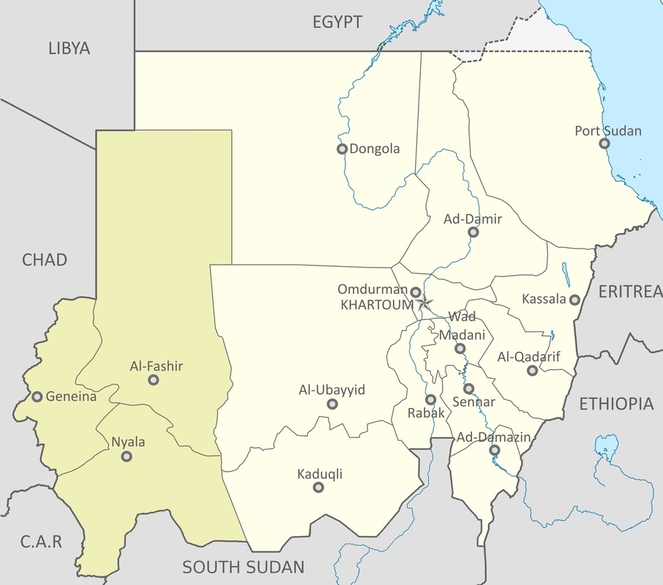
AGA'S RECOLLECTIONS. DESCRIPTION OF THE VALLEY OF TEGLA, AND ITS INHABITANTS. SURROUNDED by some beautiful mountain scenery, and situated between Durfur and Abyssinia, is a small valley going under the denomination of Tegla, or Tegeley. To this valley I stretch forth my affections, giving it the endearing appellation of my native home and father land. It was there that I was born; 'twas there that I received the fond looks of a loving mother; and it was there that I set my feet for the first time upon a world full of cares, trials, difficulties, and dangers. I cannot give the exact limits of the valley of Tegla. There were, however, three Chiefs who exercised power over its inhabitants. Mehemet Chammaroo (under whose government my father was) ruled the centre; while two other princes had the sway, one on each side. Like many of the regions bordering on the equator, the valley of Tegla is exposed to the excessive heat of the burning sun. Its seasons, properly speaking, can only be divided into two parts--the rainy and the dry season. In the rainy season Page 12 agriculture is carried on by the farmer on a very small scale--the only substitute for a plough being a long pole, with something similar to a shovel attached to the end of it. With this instrument the surface of the ground is broken, after which the seed (consisting of Indian corn and maize) is sown in small quantities at certain distances from each other. After it has grown a certain length, part of it is transplanted into different fields, thus giving the crop full scope and encouragement to grow. When the corn begins to change colour, the rainy season declines, till at length the refulgent rays of the sun perceive the inhabitant of the vale preparing to reap his harvest. The rain is over, the dry season is on; many begin to reap the fruits of their labour.* * How wisely has Providence ordered all things. The inhabitants of Egypt have no rain, and yet the river Nile has its yearly inundations. The rainy season in the valley of Tegla, and its neighbouring countries forms tributaries to the Nile; makes it overflow its banks; spreads fertility through the muddy soil of the country; and supplies its dependant natives with the necessaries of life... SELF-HISTORY.--YOUTH AND PREMATURE SLAVERY. YOUTH is the period in which true happiness is enjoyed. It is the time when all trials and difficulties seem to lie in oblivion; and it is then that all principles can be instilled into the tender mind. The mind in youth is not prejudiced, builds many castles in the air although without any symptoms of ambition, is pleased and always desires to please. It is like the shoot of a tender flower ere its leaves expand. It is the germ on which strong propensities and sentiments are framed. It is in youth that the stronger faculties of the artist, the genius, and the mechanic are pictured. None of these propensities, however, were predominant in my mind while home was my residence. Being the oldest of the boys, my pride was raised to no small degree when I beheld my father preparing a farm for me. This event filled my mind with the grand anticipation of leaving the goats to my brother, who was then beginning to work a little. While my father was making these preparations, I had the constant charge of the goats; and being accompanied by two other boys who resided near Page 18 my father's house, we wandered many miles from home, by which means we acquired an acquaintance with the different districts of the country. 'Twas while in these rambles with my companions that I became the victim of the slaveholder. While tending our flock between two hills, we spied two men shaping their course towards us. They inquired whether we had any goats for them, a term quite common in that country. Our reply was, of course, in the negative; but they merely used this craft in order to deprive us of suspicion. Myself being nearest to them, I was firmly secured in their hands, and forced away whether I would or not. On showing symptoms of resistance, one of them procured a green twig, and whipped me till the blood was falling in drops from my legs. After proceeding some miles, we came to a house, where I was tied with ropes hand and foot, and laid down to rest. Next morning, before dawn of day, my cruel master took the ropes off my legs, and, setting me on a certain direction, desired me to walk while he followed with a large whip. Terrified out of my judgment, I saw that there was nothing to be done but either do or suffer. I of course chose the former. This was rather a harsh treatment for a child of eight years of age. Commencing before sunrise, we continued our journey till the middle of the day, when we arrived at a village. This village went under the name of Tegla. At the village of Tegla my inhuman master disposed of me, and returned Page 19 home. On entering the house of my new master, what was my astonishment on seeing an old acquaintance there, a girl with whom I had an interview a few weeks previous. She, poor creature, had also fallen into the hands of the enemy only a few days before myself. This girl, whose name was Medina, admonished me on this occasion, telling me to do whatever I was desired, assuring me that the white man would not care for taking our lives, that the killing of us would not cost him a thought. We were well secured with iron chains on our feet, and were never permitted to go far from the house. We could never fall upon plans for effecting our escape, although we often tried different means for that purpose. One night I managed to get the chains off my feet, and would have escaped had not the fear of being recaptured prevented me. Notwithstanding all the plans which Medina resorted to, she could not get the chains off her feet. A short time after this, a caravan (consisting of merchants and travellers) left the village of Tegla. With this caravan our master joined, and, after a day's journey, we arrived at a small village, where he was disappointed in his object, viz., the disposing of us into another's hands, therefore he had no other recourse but to return to his own country. Arriving at the village, we received the heart-rending intelligence that our friends had been in search of us, and were frustrated, having heard that we were taken to a distant land. Another caravan was soon Page 20 equipped for a farther distance. This was some four day's journey from the village of Tegla, to a large town called Kordofan, under the jurisdiction of the Pacha of Egypt. The first night we pitched our tents at a well of water, not having seen a single house on the whole of our journey. The second day we continued our journey till late at night, when we received the guidance of some light from a distant village, where we arrived and reposed ourselves. This village was called by the natives Albaharr, or, as seen on our maps, Albeit. The inhabitants are a people who might be distinguished among a thousand different nations. Such is their love of jewellery, that they wear rings on their nostrils as well as ears. Instead of horses, or donkeys, or camels, they ride upon bullocks, the noses of which are also adorned with rings, and to these the bridles are tied. We stayed a few days at this place, and shared the unfeigned hospitality of the people, who were uncommonly kind. During our stay here, Medina and I were taken to the camp of the Turks, not far away from the village, where we were put through different exercises. The first thing we were desired to do was to show our tongues, and then our teeth. The rest of our limbs underwent a serious examination also. Having undergone this examination, we were taken back to our lodgings again. The next day our master joined the Turks, who were returning to Kordofan, and by that means ensured our fate of never returning to our native country... http://docsouth.unc.edu/neh/aga/aga.html#n...
 Posted By: Steve Williams
Wednesday, October 22nd 2014 at 8:24AM
You can also
click
here to view all posts by this author...
|
|
|
The time had not arrived when slave-dealers went to Cairo to dispose of their slaves, in consequence we had to stay at Goortie for three months, during which time I was employed in doing sundry things. First of all, I was sent to live with a friend of my master's, who behaved very kindly to me. Here I had to take care of some cows, while the man's two sons attended to the lands of the farm, which were between three and four miles from the house. About six miles from Goortie, my master married a young woman, with whom I was soon taken to live. In many of the eastern countries, and particularly Egypt, a man is not confined to one wife, but can keep as many as his abilities will allow him. My master's recent marriage was the cause of raising a deal of jealousy on the part of the old one. He chiefly resided at the house he had built for the former, and when the latter met
Page 33
him they were sure to quarrel about something or other. On one occasion, being sent with some corn to the old lady's, on a donkey's back, she would not allow me to empty the sacks, so I had to stand for about half a day to await my master's arrival. On his coming up to me, he asked me why I did not empty the sacks? I told him my reason; after which he went into the house, and a quarrel ensued. The neighbours gathered about the house, and tried to prevent the quarrel; but, my master being in a passion, they found great difficulty in getting him quieted. After he had broken a great number of things, they managed to get him out of the house, and I obtained liberty to empty my sacks and return home. My master also returned to his new wife's, and never went back to Goortie, till within a few days of leaving for Cairo. The slave-ship landed in its season at Goortie, and took us on board. We arrived at the first cataracts of the Nile, and it being impracticable for the ship to proceed farther, we had to change our quarters. The masters busied themselves looking out for another ship to contain their menagerie of human beings. For this purpose we had to travel by land, and finally to sleep on land, before embarking again. Our new ship was a small one, and could not contain all our luggage without a crush; in consesequence, some of the slaves sickened, and were paid for their trouble by receiving a good flogging. After a fortnight had elapsed, we landed within a few miles of Cairo, in order to make ourselves
Page 34
look as fresh as daisies before entering the city. From this place we were made to march in military order. The grown up slaves led the van, and I, along with other young ones, marched in the rear, while our masters kept on the flanks. On reaching the entrance to the royal city, we were all counted by a man appointed for that purpose, who found that there were forty of us and ten masters. As soon as the counting was over, each master took his slaves and separated. Our master took us to an acquaintance of his, where he disposed of us, one after the other, but not before two months elapsed. We were regularly taken and exhibited in the slave market, where purchasers came to pick and choose. The grown up ones soon went off, while the small live stock remained for a long time in the market. A month after, my master shifted to another part of the town, a place near the barracks of Cairo. Here there were several of his countrymen, (under the employ of the Pacha,) whose duty it was to keep the gate of a manufactory of sundry wares. In this place he left me, and went away, but where I could not tell. A week or ten days after he returned for me, and took me to my old quarter, the slave market, where he soon disposed of me. My ninth master was a European gentleman, of the name of P----. With Mr. P---- I only lived a fortnight, when I was dispatched (under charge of a Turk) down to Alexandria. The next master into whose hands I fell was R---- T----, Esq., British Consul in Egypt. Having fallen
Page 35
into the hands of a British gentleman, I now thought that I was lost, having heard so many Mahommedan prejudices against Christians. Contrary to my expectation, however, I was treated with the greatest clemency, received many indulgences which I never met with before, and what completed my happiness was the pains which Mr. L----, my master's son-in-law, took in learning me to read and write. When he found it impossible to teach me himself, the duty devolved upon Mrs. S----, the housekeeper. I found much gratification in this novel treatment, and expected to know great things by it. Mrs. L., who took great charge of me, never failed in seeing that I was comfortable. While all the African formalities were exchanging for European fashions, four months elapsed, after which the family sailed up the Nile to the first cataracts, taking me, and Mrs. S----, and an Italian servant, of the name of Jacquomo. The first cataracts are about 400 miles from Alexandria. A whole month was spent in going and coming back from the cataracts; and the objects which occupied the particular attention of the family were the ancient buildings then standing in ruins. On the left bank of the Nile, and at some distance from Cairo, the Egyptian pyramids present a huge spectacle, having the appearance of small hills. These and many other edifices were built in the distant ages of antiquity, when the Egyptian monarchy flourished under its native dynasty. It is now a country ruled by a despotic viceroy.
Wednesday, October 22nd 2014 at 10:52AM
Steve Williams
|
Blogs Home
|
|
|