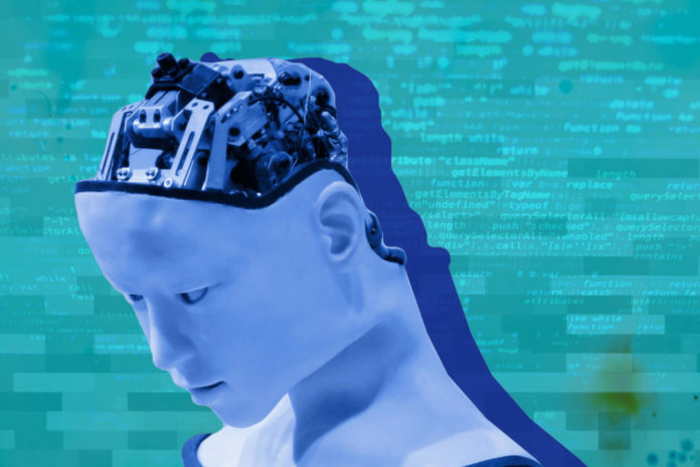
The Impact of Artificial Intelligence - Widespread Job Losses
No question, the impact of artificial intelligence and automation will be profound. But we need to prepare for a future in which job loss reaches 99 percent.
By Calum McClelland
Artificial intelligence (AI) is no longer a thing of science fiction, it exists in the world all around us, automating simple tasks and dramatically improving our lives. But as AI and automation becomes increasingly capable, how will this alternative labor source affect your future workforce? In this article, we’ll take a look at both some optimistic and pessimistic views of the future of our jobs amidst increasing AI capabilities.
Technology-driven societal changes, like what we’re experiencing with AI and automation, always engender concern and fear—and for good reason. A two-year study from McKinsey Global Institute suggests that by 2030, intelligent agents and robots could replace as much as 30 percent of the world’s current human labor. McKinsey suggests that, in terms of scale, the automation revolution could rival the move away from agricultural labor during the 1900s in the United States and Europe, and more recently, the explosion of the Chinese labor economy.
McKinsey reckons that, depending upon various adoption scenarios, automation will displace between 400 and 800 million jobs by 2030, requiring as many as 375 million people to switch job categories entirely. How could such a shift not cause fear and concern, especially for the world’s vulnerable countries and populations?
The Brookings Institution suggests that even if automation only reaches the 38 percent means of most forecasts, some Western democracies are likely to resort to authoritarian policies to stave off civil chaos, much like they did during the Great Depression. Brookings writes, “The United States would look like Syria or Iraq, with armed bands of young men with few employment prospects other than war, violence, or theft.” With frightening yet authoritative predictions like those, it’s no wonder AI and automation keeps many of us up at night.
“Stop being a Luddite”
The Luddites were textiles workers who protested against automation, eventually attacking and burning factories because, “they feared that unskilled machine operators were robbing them of their livelihood.” The Luddite movement occurred all the way back in 1811, so concerns about job losses or job displacements due to automation are far from new.
When fear or concern is raised about the potential impact of artificial intelligence and automation on our workforce, a typical response is thus to point to the past; the same concerns are raised time and again and prove unfounded.
In 1961, President Kennedy said, “the major challenge of the sixties is to maintain full employment at a time when automation is replacing men.” In the 1980s, the advent of personal computers spurred “computerphobia” with many fearing computers would replace them.
So what happened?
Despite these fears and concerns, every technological shift has ended up creating more jobs than were destroyed. When particular tasks are automated, becoming cheaper and faster, you need more human workers to do the other functions in the process that haven’t been automated.
“During the Industrial Revolution more and more tasks in the weaving process were automated, prompting workers to focus on the things machines could not do, such as operating a machine, and then tending multiple machines to keep them running smoothly. This caused output to grow explosively. In America during the 19th century the amount of coarse cloth a single weaver could produce in an hour increased by a factor of 50, and the amount of labour required per yard of cloth fell by 98%. This made cloth cheaper and increased demand for it, which in turn created more jobs for weavers: their numbers quadrupled between 1830 and 1900. In other words, technology gradually changed the nature of the weaver’s job, and the skills required to do it, rather than replacing it altogether.” — The Economist, Automation and Anxiety
Impact of Artificial Intelligence — A Bright Future?
Looking back on history, it seems reasonable to conclude that fears and concerns regarding AI and automation are understandable but ultimately unwarranted. Technological change may eliminate specific jobs, but it has always created more in the process.
A two-year study from McKinsey Global Institute suggests that by 2030, intelligent agents and robots could eliminate as much as 30 percent of the world’s human labor, displacing the jobs of as many as 800 million people.
Click To Tweet
Beyond net job creation, there are other reasons to be optimistic about the impact of artificial intelligence and automation.
“Simply put, jobs that robots can replace are not good jobs in the first place. As humans, we climb up the rungs of drudgery — physically tasking or mind-numbing jobs — to jobs that use what got us to the top of the food chain, our brains.” — The Wall Street Journal, The Robots Are Coming. Welcome Them.
By eliminating the tedium, AI and automation can free us to pursue careers that give us a greater sense of meaning and well-being. Careers that challenge us, instill a sense of progress, provide us with autonomy, and make us feel like we belong; all research-backed attributes of a satisfying job.
And at a higher level, AI and automation will also help to eliminate disease and world poverty. Already, AI is driving great advances in medicine and healthcare with better disease prevention, higher accuracy diagnosis, and more effective treatment and cures. When it comes to eliminating world poverty, one of the biggest barriers is identifying where help is needed most. By applying AI analysis to data from satellite images, this barrier can be surmounted, focusing aid most effectively.
Impact of Artificial Intelligence — A Dark Future.
I am all for optimism. But as much as I’d like to believe all of the above, this bright outlook on the future relies on seemingly shaky premises. Namely:
The past is an accurate predictor of the future.
We can weather the painful transition.
There are some jobs that only humans can do.
The past isn’t an accurate predictor of the future
As explored earlier, a common response to fears and concerns over the impact of artificial intelligence and automation is to point to the past. However, this approach only works if the future behaves similarly. There are many things that are different now than in the past, and these factors give us good reason to believe that the future will play out differently.
In the past, technological disruption of one industry didn’t necessarily mean the disruption of another. Let’s take car manufacturing as an example; a robot in automobile manufacturing can drive big gains in productivity and efficiency, but that same robot would be useless trying to manufacture anything other than a car. The underlying technology of the robot might be adapted, but at best that still only addresses manufacturing
AI is different because it can be applied to virtually any industry. When you develop AI that can understand language, recognize patterns, and problem solve, disruption isn’t contained. Imagine creating an AI that can diagnose disease and handle medications, address lawsuits, and write articles like this one. No need to imagine: AI is already doing those exact things.
Another important distinction between now and the past is the speed of technological progress. Technological progress doesn’t advance linearly, it advances exponentially. Consider Moore’s Law: the number of transistors on an integrated circuit doubles roughly every two years.
In the words of University of Colorado physics professor Albert Allen Bartlett, “The greatest shortcoming of the human race is our inability to understand the exponential function.” We drastically underestimate what happens when a value keeps doubling.
What do you get when technological progress is accelerating and AI can do jobs across a range of industries? An accelerating pace of job destruction.
“There’s no economic law that says ‘You will always create enough jobs or the balance will always be even’, it’s possible for a technology to dramatically favour one group and to hurt another group, and the net of that might be that you have fewer jobs” —Erik Brynjolfsson, Director of the MIT Initiative on the Digital Economy.
READ MORE: The Impact of Artificial Intelligence - Widespread Job Losses:
https://www.iotforall.com/impact-of-artifi...
 Posted By: Dea. Ron Gray Sr.
Tuesday, September 29th 2020 at 1:49PM
You can also
click
here to view all posts by this author...