House gives final approval to budget plan including Biden’s $1.9 trillion stimulus, over unified Republican opposition.
By Luke Broadwater, Hailey Fuchs and Jim Tankersley
The House gave final approval on Friday to a budget blueprint that included President Biden’s $1.9 trillion stimulus plan, advancing it over unanimous Republican opposition as Democrats pressed forward with plans to begin drafting the aid package next week and speed it through the House by the end of the month.
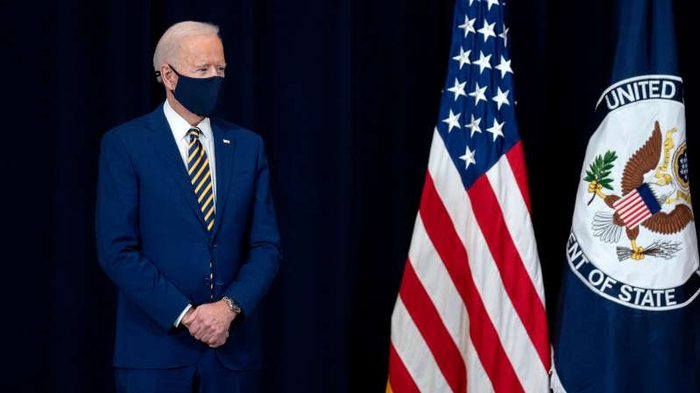
“We’ve got a chance to do something big here,” Mr. Biden told senior House Democrats at the White House earlier Friday, just hours after the Senate had endorsed his sweeping pandemic aid package in a pre-dawn, party-line vote and not long before the House adopted it, 219-209, with every Republican opposed.
Earlier, after a 15-hour voting session that stretched overnight, Vice President Kamala Harris cast her first tiebreaking vote to push the measure through the Senate by a vote of 51 to 50 at about 5:30 a.m.
In the marathon session — known as a vote-a-rama and for which more than 800 amendments were drafted — Senate Democrats had maneuvered through a series of politically tricky amendments that Republicans sought to attach to their budget plan.
They also endorsed a number of ideas that could drive negotiations on Mr. Biden’s stimulus measure, embracing a proposal to exclude high earners from direct payments of up to $1,400 — an idea that the president and leading Democrats have already said they are open to — and the creation of a new form of child allowance for low- and middle-income families. Senators also agreed to bar any increase in the federal minimum wage, a centerpiece of Mr. Biden’s plan, during the pandemic.
Despite the amendments, the process left Mr. Biden’s plan largely intact as Democrats moved forward.
“We cannot repeat the mistakes of the past,” said Senator Chuck Schumer, Democrat of New York and the majority leader. “We cannot do too little.”
While the measure does not have the force of law, the action in both chambers paves the way for the next step in the budget reconciliation process, which ultimately would allow Democrats to advance Mr. Biden’s plan without Republican votes. It lays out a quick timetable for doing so, directing committees to produce legislation by Feb. 16.
Democrats were set next week to begin drafting the reconciliation measure, and in a letter to Democrats on Friday, Speaker Nancy Pelosi said the House would complete its work on the package by the end of the month.
“With this budget resolution, we have taken a giant step to save lives and livelihoods,” Ms. Pelosi wrote.
Still, the proposal did not pass the Senate without some setbacks for Democrats. In a potential sign of trouble ahead for a major plank of Mr. Biden’s plan, the Senate agreed to a proposal by Senator Joni Ernst, Republican of Iowa, to prohibit any minimum wage increase during the pandemic.
The measure passed by a voice vote, signaling that Democrats were not attempting to defeat it. Mr. Biden’s stimulus package would increase the wage to $15 per hour by 2025, and Senator Bernie Sanders, independent of Vermont, who has been leading the push for the wage increase in the Senate, said he was not contesting Ms. Ernst’s effort because he had never sought to raise it during the pandemic.
But the vote was a signal that the wage increase could be difficult to pass in an evenly split Senate, where at least one Democrat, Senator Joe Manchin III of West Virginia, is on record opposing it.
“A $15 federal minimum wage would be devastating for our hardest-hit small businesses at a time they can least afford it,” Ms. Ernst said on the Senate floor. “We should not have a one-size-fits-all policy set by Washington politicians.”
 Posted By: Dea. Ron Gray Sr.
Friday, February 5th 2021 at 9:37PM
You can also
click
here to view all posts by this author...