7 Things the First Amendment Doesn’t Protect
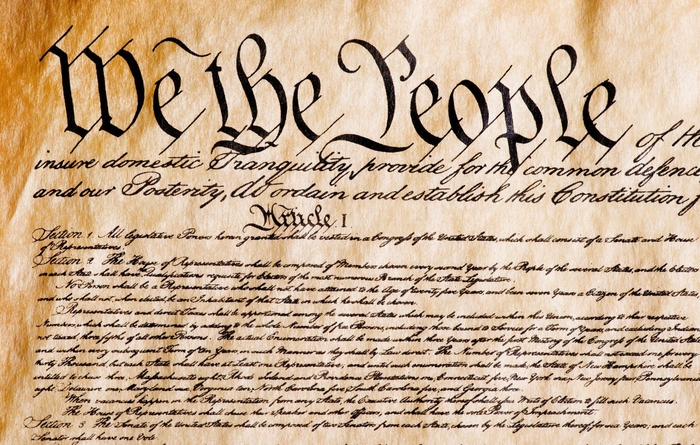
“Congress shall make no law respecting an establishment of religion, or prohibiting the free exercise thereof; or abridging the freedom of speech, or of the press; or the right of the people peaceably to assemble, and to petition the government for a redress of grievances.”
These 45 words make up the complete First Amendment to the U.S. Constitution. For many of us, they are the most important words ever strung into a complex sentence, because they’re the foundation for the unique American way of life.
Originally, First Amendment protections applied only to laws passed by the U.S. Congress, but since 1925 ( Gitlow v. New York, 268 U.S. 652), they’ve applied to the rules set by government at any level — federal, state, and local. The founders obviously intended that the First Amendment be a broad, sweeping statement of the rights they wanted to secure for themselves and their descendents.
But the First Amendment can’t protect Internet and social media users who forget that the free speech guarantee isn’t a free pass to saying whatever you want without facing consequences. That’s because while the First Amendment protects some kinds of speech (that is, you can say or do it), there’s no requirement that other people (such as employers, fraternal organizations, or schools) have to associate with you once you do. You can be fired, lose a professional license, or face a range of litigation for doing or saying things that, while they may be protected speech, violate other laws or contracts.
Also, the First Amendment does not protect all kinds of speech. Justice Oliver Wendell Holmes wrote that “the most stringent protection of free speech would not protect a man in falsely shouting fire in a theatre and causing a panic.” Other areas that are not protected include solicitation, child pornography, and obscenity.
In addition, there are seven broad categories of speech (which includes things written or published online or in social media) that may not be protected by the First Amendment. Knowing what they are, so that you can decide what risks you are willing to take, is just good sense.
LEARN MORE ABOUT "7 Things the First Amendment Doesn’t Protect"
https://www.business2community.com/social-...
 Posted By: Dea. Ron Gray Sr.
Wednesday, October 13th 2021 at 5:19PM
You can also
click
here to view all posts by this author...