Home > Blogs > Post Content
|
|
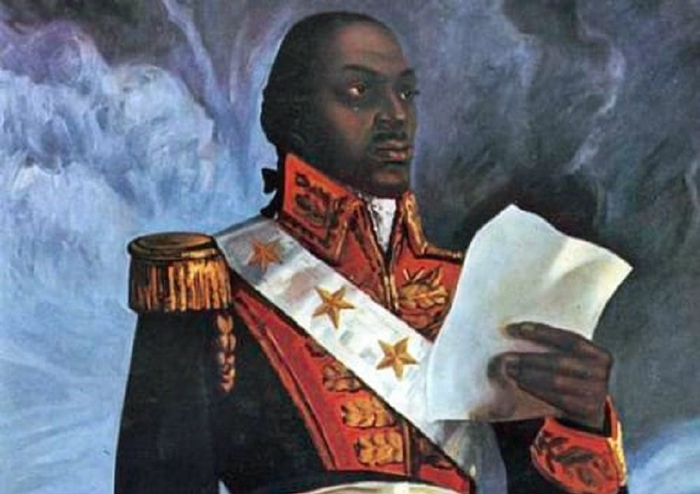
Why the U.S. never recognized Haiti as a nation until 1862 Haiti is the result of the first successful slave uprising that resulted in an independent state in 1804. Prior to the revolt, the island that is modern Haiti was known as Saint-Domingue. Then a sugar island, the French largely depended on it for economic growth. But on the night of August 22 and 23, 1791, enslaved people rose against their French enslavers and they began the biggest and bloodiest slave revolt in history. In what is now the African diaspora’s oldest country, Haiti is in political crisis again, with protesters demanding new democratic elections and the resignation of current President Jovenel Moïse following years of corruption claims. For about half a century, the Caribbean nation has struggled to overcome the problems of poverty and inequality. READ MORE: Why the U.S. never recognized Haiti as a nation until 1862 https://face2faceafrica.com/article/why-th...
 Posted By: Dea. Ron Gray Sr.
Monday, June 5th 2023 at 8:26AM
You can also
click
here to view all posts by this author...
|
 |
Why the UN-founders, racistlyIgnorant euroNations have kept Haiti poor and ignorant since 18th century?
Sunday, June 11th 2023 at 9:28AM
robert powell
|
|
|
Hey Mr. Robert Powell, you have heard of the Duvalier family, father-and-son dictators, reigned over Haiti with brute force until the 1980s. Their regime plunged Haiti deeper into debt, and introduced the so-called Tontons Macoutes, an infamous secret police force that terrorized the country to keep the people in fear.
Sunday, June 11th 2023 at 4:10PM
Dea. Ron Gray Sr.
|
|
|
I met babyDoc once..and have known their Family History well
..BUT deaCON he was old; but NOT 18th century old...not 1791 old...
I also know that Hispaniola; the island paganChristian Cristobal Columbo, some say first port in America
and where he for latinoJesus first brought euro slaverAmericana and genocideAmericana ...
..Those euroMonsters, divided one island into FRENCH on One Side and Spanish on the other side...
Evil for both sides Haiti and Dominican Republic...from the euroPagan Christian hordes....
..Tontons Macoutes were NOTHING compared to the euroS..1791---->2023
http://blackinamerica.com/content/297326/h...
Monday, June 12th 2023 at 8:12AM
robert powell
|
|
|
What a interesting history Haiti has. You know Mr. Robert Powell, To fully analyze Haiti’s situation today, it would be appropriate to look at its relationship with its close neighbor to the South — the United States – both now and all through history.
Monday, June 12th 2023 at 10:46AM
Dea. Ron Gray Sr.
|
|
|
close neighbor to the north..Haiti to USA
..NEVER was Haiti treated as a neighbor in any direction....
**************************************************************************************************
U.S Department of State
The situation in St. Domingue put the Democratic-Republican party and its leader, Thomas Jefferson,
in somewhat of a political dilemma. Jefferson believed strongly in the French Revolution and the ideals
it promoted, but as a Virginia slaveholder popular among other Virginia slaveholders, Jefferson also feared
the specter of slave revolt. When faced with the question of what the United States should do about the
French colony of St. Domingue, Jefferson favored offering limited aid to suppress the revolt, but also suggested
that the slaveowners should aim for a compromise similar to that Jamaican slaveholders made with communities
of escaped slaves in 1739. Despite their numerous differences on other issues, Secretary of the Treasury and
leader of the rival Federalist Party Alexander Hamilton largely agreed with Jefferson regarding Haiti policy.
The Haitian revolution came to North American shores in the form of a refugee crisis.
In 1793, competing factions battled for control of the then-capital of St. Domingue, Cap-Fran�ais
The fighting and ensuing fire destroyed much of the capital, and refugees piled into French naval ships
anchored in the harbor. The French navy deposited the refugees in Norfolk, Virginia. Many refugees also
settled in Baltimore, Philadelphia, and New York. These refugees were predominantly white, though many
had brought their slaves with them. The refugees became involved in �migr� politics, hoping to influence
U.S. foreign policy. Anxieties about their actions, along with those of European radicals also residing in the
United States, led to the passage of the Alien and Sedition Acts.
The Federalist administration of President John Adams signaled a change in policy.
Adams was resolutely anti-slavery and felt no need to aid white forces in St. Domingue.
He was also concerned that L'Ouverture would choose to pursue a policy of state-supported piracy.
Under President Thomas Jefferson's presidency, the United States cut off aid to L'Ouverture and instead
pursued a policy to isolate Haiti, fearing that the Haitian revolution would spread to the United States.
These concerns were in fact unfounded, as the fledgling Haitian state was more concerned with its own
survival than with exporting revolution.
Jefferson grew even more hostile after L'Ouverture's successor, Jean-Jacques Dessalines, ordered the
execution of whites remaining after the Napoleonic attempts to reconquer St. Domingue and
reimpose slavery (French defeat led to the Louisiana Purchase.) Jefferson refused to recognize Haitian
independence, a policy to which U.S. Federalists also acquiesced.
Although France recognized Haitian independence in 1825,
USA in 1862 recognized Haiti's status as a sovereign, independent nation.
Monday, June 12th 2023 at 11:51AM
robert powell
|
|
|
I am glad you went to the history of The U.S. involvement in The History of Haiti for that answer because it would be hard to miss.
Monday, June 12th 2023 at 12:43PM
Dea. Ron Gray Sr.
|
Blogs Home
|
|
|