
" Black People Make Up a Large % of People on Welfare & a Small % of Voters, so I'm not going to worry about it and I don't think the Black people want me worrying about it. " ... Applause. In The Heat Of The Night-The Leftover Man Season 6, Episode 17
See section of clip at 07:10
Do You Think Black Americans Make Up a Large % of People on Welfare & a Small % of Voters?
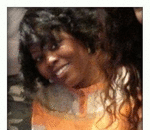
Studies show that the public dramatically overestimates the number of African-Americans in poverty, with the cause of this attributed to media trends and its portrayal of poverty. Franklin Gilliam’s study examined the intersection of people’s attitudes on race, gender, and the media. The experiment showed an 11-minute news clip, with a welfare story embedded at some point in the clip, to two groups of participants. Each welfare clip had a different recipient — one with a white woman and the other with a black woman. The results showed that people were extremely accurate in their recall of the race and gender of the black female welfare recipient, confirming that the gendered and racial narrative had entered common knowledge and that implicit associations were often made.
"Welfare queen" archetype
A welfare queen is a pejorative phrase used in the United States to describe people who are accused of collecting excessive welfare payments through fraud or manipulation. Reporting on welfare fraud began during the early 1960s, appearing in general interest magazines such as Readers Digest. Studies show that the welfare queen idea has roots in both race and gender. Franklin Gilliam, the author of a public perception experiment on welfare, concludes that: While poor women of all races get blamed for their impoverished condition, African-American women are seen to commit the most egregious violations of American values. This story line taps into stereotypes about both women (uncontrolled s*xuality) and African-Americans (laziness).
The term entered the American lexicon during Ronald Reagan's 1976 presidential campaign when he described a "welfare queen" from Chicago's South Side. During his 1976 presidential campaign, Reagan would tell the story of a woman from Chicago's South Side who was arrested for welfare fraud: ["She has eighty names, thirty addresses, twelve Social Security cards and is collecting veteran's benefits on four non-existing deceased husbands. And she is collecting Social Security on her cards. She's got Medicaid, getting food stamps, and she is collecting welfare under each of her names. Her tax-free cash income is over $150,000."]
In response to Reagan's use of the term, Susan Douglas, a professor of communication studies at the University of Michigan, writes: "He specialized in the exaggerated, outrageous tale ( a gift of being a trained and seasoned Actor) that was almost always unsubstantiated, usually false, yet so sensational that it merited repeated recounting… And because his ‘examples’ of welfare queens drew on existing stereotypes of welfare cheats and resonated with news stories about welfare fraud, they did indeed gain real traction."
Criticism focused on the fact that individuals committing welfare fraud were, in reality, a very small percentage of those legitimately receiving welfare. Since then, it has become a stigmatizing label placed on recidivist poor mothers, with studies showing that it often carries gendered and racial connotations. Although American women can no longer stay on welfare indefinitely due to the Personal Responsibility and Work Opportunity Act, the term continues to shape American dialogue on poverty. ...
http://en.wikipedia.org/wiki/Welfare_queen...
"Welfare queen" archetype
A welfare queen is a pejorative phrase used in the United States to describe people who are accused of collecting excessive welfare payments through fraud or manipulation. Reporting on welfare fraud began during the early 1960s, appearing in general interest magazines such as Readers Digest. Studies show that the welfare queen idea has roots in both race and gender. Franklin Gilliam, the author of a public perception experiment on welfare, concludes that: While poor women of all races get blamed for their impoverished condition, African-American women are seen to commit the most egregious violations of American values. This story line taps into stereotypes about both women (uncontrolled s*xuality) and African-Americans (laziness).
The term entered the American lexicon during Ronald Reagan's 1976 presidential campaign when he described a "welfare queen" from Chicago's South Side. During his 1976 presidential campaign, Reagan would tell the story of a woman from Chicago's South Side who was arrested for welfare fraud: ["She has eighty names, thirty addresses, twelve Social Security cards and is collecting veteran's benefits on four non-existing deceased husbands. And she is collecting Social Security on her cards. She's got Medicaid, getting food stamps, and she is collecting welfare under each of her names. Her tax-free cash income is over $150,000."]
In response to Reagan's use of the term, Susan Douglas, a professor of communication studies at the University of Michigan, writes: "He specialized in the exaggerated, outrageous tale ( a gift of being a trained and seasoned Actor) that was almost always unsubstantiated, usually false, yet so sensational that it merited repeated recounting… And because his ‘examples’ of welfare queens drew on existing stereotypes of welfare cheats and resonated with news stories about welfare fraud, they did indeed gain real traction."
Criticism focused on the fact that individuals committing welfare fraud were, in reality, a very small percentage of those legitimately receiving welfare. Since then, it has become a stigmatizing label placed on recidivist poor mothers, with studies showing that it often carries gendered and racial connotations. Although American women can no longer stay on welfare indefinitely due to the Personal Responsibility and Work Opportunity Act, the term continues to shape American dialogue on poverty. ...
http://en.wikipedia.org/wiki/Welfare_queen...
Question:
What is the race percentage for welfare recipients?
Answer:
Based on the 2006 TOTAL population of each respective race in the United States, it is:
~37.8% White (37.8% of the White population is on welfare)
~27.78% Black* (27.78% of the Black population is on welfare)
~11.47% Hispanic* ** (11.47% of the Hispanic population is on welfare)
Another way to look at this data is based on the total number of people who receive welfare. It is:
~39% White 11,661,000 of 29,900,000 recipients
~38% Black 11,362,000 of 29,900,000
~17% Hispanic 5,083,000 of 29,900,000
Welfare Statistics www.webcrawler.com
Find more sources/options for Welfare Statistics
SAN Performance Monitor www.virtualinstruments.com/