
Tony Riddick comforts his mother, Elaine Riddick during the Eugenics Task Force listening session in Raleigh, NC, June 22. / Courtesy photoCompensation Sought for Survivors of State's Eugenics Policies
N . C . Urges Sterilization Victims to Come Forward
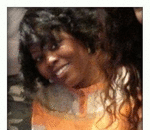
Lela Dunston was only 13 when she gave birth to a son in the Chapel Hill area of North Carolina. She said she was unaware why county officials had visited her mother within a year of her son's birth, or the duress under which her mother was forced to commit her to the home for wayward girls. While Dunston had committed no crime, she was carted off and held for years at the institution. Under North Carolina statute, Dunston was eligible to leave the home only after being surgically sterilized under a platform known as eugenic sterilization.
"They never asked me anything, but later presented documents that I supposedly signed giving them permission to operate on me. It was not my signature. I never signed anything," Dunston said.
Dunston , along with a handful of other sterilization victims recently told their stories during a Eugenics Task Force Listening Session in Raleigh, North Carolina. In all, more than 7,600 men, women and children as young as 10 were sterilized under North Carolina's eugenics laws between 1924 and 1979. Eugenic sterilization laws sought to eliminate unwanted social characteristics from society by ensuring that the poor, the weak, the socially deviant, and the mentally or physically unstable, did not produce children.
What began as a medical attempt at better breeding during the antebellum, evolved into a cultural construct that enforced segregation through the sterilization of white females who crossed color lines, and served as an agent of population control among Blacks and immigrants. Social workers would coerce families to have their children sterilized under threat of losing their land, public assistance, or custody of the children. Neighbors, rivals, and any law abiding citizen had a right and a duty to report "deviant" behavior to authorities, though most often sterilizations resulted from reports of s*xual promiscuity or poverty.
Dunston later ran away from the facility and worked as many as three jobs simultaneously to care for herself. When reunited with her son years later, she would find he suffered a similar fate, and was never able to have children. "The government claims to have done the sterilization procedure on kids as young as eight or nine, but I believe that they did it on my son before that. If being poor or promiscuous is in the genes, the state would feel justified in doing to the kids the same as what they did to the mothers," Dunston said. In 2002, North Carolina's eugenics program came to the attention of state Rep. Larry Womble, who has actively searched for victims of the governments mandates in order to publicly apologize and offer monetary reparations. In 1974, the Eugenics Board was disbanded, and the state formally apologized in 2002. ...
By Shantella Y. Sherman-WI Staff Writer
http://www.washingtoninformer.com/index.ph...
"They never asked me anything, but later presented documents that I supposedly signed giving them permission to operate on me. It was not my signature. I never signed anything," Dunston said.
Dunston , along with a handful of other sterilization victims recently told their stories during a Eugenics Task Force Listening Session in Raleigh, North Carolina. In all, more than 7,600 men, women and children as young as 10 were sterilized under North Carolina's eugenics laws between 1924 and 1979. Eugenic sterilization laws sought to eliminate unwanted social characteristics from society by ensuring that the poor, the weak, the socially deviant, and the mentally or physically unstable, did not produce children.
What began as a medical attempt at better breeding during the antebellum, evolved into a cultural construct that enforced segregation through the sterilization of white females who crossed color lines, and served as an agent of population control among Blacks and immigrants. Social workers would coerce families to have their children sterilized under threat of losing their land, public assistance, or custody of the children. Neighbors, rivals, and any law abiding citizen had a right and a duty to report "deviant" behavior to authorities, though most often sterilizations resulted from reports of s*xual promiscuity or poverty.
Dunston later ran away from the facility and worked as many as three jobs simultaneously to care for herself. When reunited with her son years later, she would find he suffered a similar fate, and was never able to have children. "The government claims to have done the sterilization procedure on kids as young as eight or nine, but I believe that they did it on my son before that. If being poor or promiscuous is in the genes, the state would feel justified in doing to the kids the same as what they did to the mothers," Dunston said. In 2002, North Carolina's eugenics program came to the attention of state Rep. Larry Womble, who has actively searched for victims of the governments mandates in order to publicly apologize and offer monetary reparations. In 1974, the Eugenics Board was disbanded, and the state formally apologized in 2002. ...
By Shantella Y. Sherman-WI Staff Writer
http://www.washingtoninformer.com/index.ph...


Thanks so much for this posting of such vital teaching moment , Jen...
Please keep these coming...(smile)