Press Enter to search or select a section to narrow results

Lone black in Tampa Confederate group defends Southern heritage

Lone black in Tampa Confederate group defends Southern heritage

Dea. Ron Gray Sr. · Thursday, July 23rd 2015 at 12:47PM · 1837 views


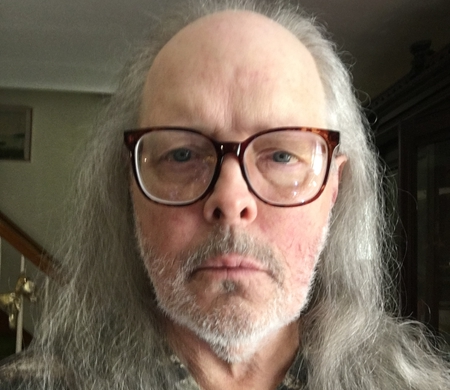
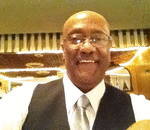
Whenever members of the Judah P. Benjamin Camp of the Sons of the Confederate Veterans don their grey wool uniforms for a demonstration or re-enactment, Al McCray is there among his brothers.

He marches in the parades and flies the Confederate flag. He speaks out against the notion that the Confederate battle flag is a symbol of racism and defends “Southern heritage” causes.

Yet McCray is different from the rest of the camp.

While the other members are descendants of soldiers that fought for the south in the Civil War, McCray is an African-American “legionnaire” — his ancestors were slaves on plantations near his hometown of Manning, South Carolina, just outside of Columbia.

“I understand the true nature of the war, and slavery was not the primary issue,’’ McCray said. “It was an issue of northern aggression and northern imperialism.’’

McCray knows many people don’t understand his defense of the Confederate flag and Confederate States of America, particularly since the flag has become a political firecracker after nine black church members were slain last month in a racially motivated shooting in Charleston, South Carolina.

Among those who question his stance, he said, are the 63-year-old’s four adult children, as well as his parents. “My family is completely the opposite of me, no one supports my views or beliefs but we still get along,” said McCray, a Tampa journalist and managing editor of TampaNewsAndTalk.com.

In his years attending Civil War conferences, reenactments and Sons of Confederate Veterans gatherings, McCray said, he has only encountered three to five other African Americans. Still, his involvement doesn’t feel “weird or out of place at all,” he said.

“We’re truly a brotherhood,” McCray said.

On his website, McCray covers the latest in Tampa politics and controversies and has interviewed political stalwarts ranging from strip club magnate Joe Redner to former governor Charlie Crist. He also writes articles like, “Has the NAACP lost its way in the woods again,” and “The War Between the States WAS NOT about Slavery.”

Abolishing slavery was little more than a war game for the north to create more rebellion and discord in the south and stop the states from maintaining their sovereignty, he said. World-wide, slavery was phasing out as the war began and would have done the same in 20 or 30 years under a Confederate States of America, McCray said.

“I’ve always felt that way growing up in the south, that linking the flag to slavery and racism was just another way to keep division between the races,” McCray said. “I always wondered why Lincoln didn’t free the slaves his first day in office if he felt so strongly about it.”

McCray was once a member of the NAACP but left the group after it passed a resolution in 1991 calling the Confederate battle flag “an abhorrence to all Americans and decent people of this country, and indeed, the world and is an odious blight upon the universe.”

He became involved in the Tampa chapter of the Sons of Confederate Veterans shortly after he moved to Tampa in 2000. He wrote an opinion article, published in The Tampa Tribune, decrying South Carolina’s compromise with the NAACP to replace a large Confederate flag with a smaller version on the capitol grounds — the flag that was officially removed Friday. His views caught the attention of the Judah P. Benjamin Camp, and they extended an invitation.

Even though he doesn’t have any direct ancestors that were soldiers in the Civil War — normally, a stringent requirement for membership — the camp allowed him to join based on his vast knowledge of Confederate history, and he immediately became a spokesman of sorts that “opened doors to more diversity,” said Judah P. Benjamin Camp member Phil Walters.

“He’s educated us on a lot of issues on the black community and opened doors for us, getting us on black radio stations and in good community conversations,” said Walters, a Tampa alligator trapper. “He’s the kind of guy that wants people to wonder why there’s a black guy marching with the Confederate flag so they ask questions and learn the truth about our history. You don’t see a lot of diversity in these southern groups ... but everyone and anyone is welcome. But if you’re a skinhead or come in with a white robe over your face, we’ll tell you to get lost.”

The Sons of Confederate Veterans isn’t the only club to which McCray holds membership. He is on the board of directors for the Tampa Tiger Bay Club and often socializes with the city’s political movers and shakers.

“Some people are shocked when they see pictures of Al with the flag or think it’s a little weird, but when you talk to the guy he’s very nice and very knowledgeable,” said Don Kruse, president and CEO of Beauty and Health Institute and a fellow Tiger Bay Club member who McCray has interviewed for his website . “Everybody knows Al, he’s very well respected, and he believes wholeheartedly in the heritage of that flag.”

McCray is “definitely not afraid” to wear his gray confederate uniform in the Town ‘n’ Country Veterans Day Parade Kruse helps direct, he said. Personally, Kruse said, he would like to see the flag retired to museum displays but has come to respect McCray’s point of view.

“Prejudice is pre-judging people, and Al is a perfect example that you can’t judge a book by its cover,” Kruse said.

Despite the recent outcry over the Confederate battle flag and its symbolism, McCray said he is confident there are other black Americans that share his views. The confederacy was multicultural during the war, and so is the Sons of Confederate Veterans, he said.

“I’m in it for the cause and historical importance, not for color,” McCray said.
Share This Article

Comments (18)

robert powell Friday, July 24th 2015 at 11:25AM


Hey MANY africanAmerican males want to be in chains of the mind and body SO let stephinFletcher express himself

you can express yourself as he does

in fact

Deacon in a few years this could be you with your kingJames Version held high declaring your love and enabling of the 'whiteHeritage' bible.......

Jeni Fa Friday, July 24th 2015 at 1:16PM

@ Rob,

You aren't serious!

Jeni Fa Friday, July 24th 2015 at 1:18PM

..."In his years attending Civil War conferences, reenactments and Sons of Confederate Veterans gatherings, McCray said, he has only encountered three to five other African Americans. Still, his involvement doesn’t feel “weird or out of place at all,” he said.'...


Ok, is his expression accurate... were there Blacks that fought on the side of the Confederacy because I thought most if not all fought on the side of the Union soldiers. Perhaps it is a folly on my part to think they all escaped to fight on the side of the Union.

Anyway, I suppose this is America and McCray can express his point of view freely.


Dea. Ron Gray Sr. Saturday, July 25th 2015 at 4:26PM

Sister Fa,

Deacon in a few years this could be you with your kingJames Version held high declaring your love and enabling of the 'whiteHeritage' bible.......

That man is serious as a heart attack. Now when I ask him to back up his claim "of the 'whiteHeritage' bible......."
He can not do that or show you none of that but that is his brand of communicating and clown car tactics to confuse, confound and to perplex the direction of a free flowing conversation.

That is what he do.

Jeni Fa Saturday, July 25th 2015 at 6:24PM

@ Deac,

..."That is what he do."...

Ha!

Dea. Ron Gray Sr. Saturday, July 25th 2015 at 8:25PM

yet, he is different from the rest of the camp.

Steve Williams Sunday, July 26th 2015 at 7:28AM

Jen, I think in Louisiana there were a lot of blacks that fought for the Confederacy.

Steve Williams Sunday, July 26th 2015 at 7:32AM

The 1st Louisiana Native Guard (CSA) was a Confederate Louisianan militia that consisted of free persons of color. Formed in 1861[2] in New Orleans, Louisiana, it was disbanded on April 25, 1862. Some of the unit's members joined the Union Army's 1st Louisiana Native Guard, which later became the 73rd Regiment Infantry of the United States Colored Troops.

Steve Williams Sunday, July 26th 2015 at 7:35AM

Shortly after Louisiana's secession, Governor Thomas Overton Moore issued pleas for troops on April 17 and April 21, 1861. In response to the governor's request, a committee of ten prominent New Orleans free blacks called a meeting at the Catholic Institute on April 22. About two thousand people attended the meeting where muster lists were opened, with about 1,500 free blacks signing up. Governor Moore accepted the services of these men as part of the state's miltia.[3]

The new militia regiment was formed during May 1861, consisting mostly of free persons of color, Creole Francophones (gens de couleur). While some members of the new regiment came from wealthy prominent free-black families, a majority of the men were clerks, artisans, and skilled laborers.[4] At that time, an estimated 10,000 African American residents of Louisiana and New Orleans had gained their freedom.

Steve Williams Sunday, July 26th 2015 at 8:10AM

Jamaican-born Lieutenant Morris W. Morris, who served as an officer in the Confederate Louisiana militia regiment and subsequently served for six weeks in the Union Native Guard regiment, was unique in that he was of Jewish ancestry, making him both the only black Jewish Confederate officer and the only black Jewish Union officer [1].

Steve Williams Sunday, July 26th 2015 at 8:26AM


A few other lesser known Confederate militia units of free men of color were raised throughout Louisiana at the beginning of the war. These units included: the Baton Rouge Guards under Capt. Henry Favrot, portions of the Pointe Coupee Light Infantry under Capt. Ferdinand Claiborne, and the Augustin Guards and Monet's Guards of Natchitoches under Dr. Jean Burdin. The only official duties ever given to the Natchitoches units were funeral honor guard details.[45]

After an August 1861 battle near Hampton, Virginia, Union army Colonel John W. Phelps, of the 1st Vermont Infantry reported on the Confederate forces he faced there. Colonel Phelps' report reflects his scouts as reporting that among the Confederate artillery there was the Richmond Howitzer Battery that was manned by negroes.[46]

One account of an unidentified African American fighting for the Confederacy, from two Southern 1862 newspapers,[47] tells of "a huge negro" fighting under the command of Confederate Major General John C. Breckinridge against the 14th Maine Infantry Regiment in a battle near Baton Rouge, Louisiana, on August 5, 1862. The man was described as being "armed and equipped with knapsack, musket, and uniform", and helping to lead the attack.[48] The man's status of being a freedman or a slave is unknown.

Following the July 1862 Surrender of Murfreesborough, Tennessee, Lieutenant Colonel John G. Parkhurst of the 9th Michigan Infantry reported on African Americans serving with the Confederate First Regiment Texas Rangers and the First Georgia Rangers. His report states "There were also quite a number of negroes attached to the Texas and Georgia troops, who were armed and equipped, and took part in the several engagements with my forces during the day."[49]

Several African Americans are known to have participated in some capacity on the Southern side in the Battle of Gettysburg. After the battle in July 1863, "reported among the rebel prisoners were seven blacks in Confederate uniforms fully armed as soldiers."[50]

Dr. Lewis Steiner, Chief Inspector of the United States Sanitary Commission while observing Gen. "Stonewall" Jackson's occupation of Frederick, Maryland, in 1862: "Over 3,000 Negroes must be included in this number [Confederate troops]. These were clad in all kinds of uniforms, not only in cast-off or captured United States uniforms, but in coats with Southern buttons, State buttons, etc. These were shabby, but not shabbier or seedier than those worn by white men in the rebel ranks. Most of the Negroes had arms, rifles, muskets, sabers, bowie-knives, dirks, etc.....and were manifestly an integral portion of the Southern Confederate Army." [51]

Union Brigadier-General D. Stuart observed that "...the enemy, and especially their armed negroes, did dare to rise and fire, and did serious execution upon our men. The casualties in the brigade were 11 killed, 40 wounded, and 4 missing; aggregate, 55...."[51]

The number of African-Americans, both slave and free, that served in the Confederate Army in a direct combat capacity was minor, and was never official policy. After the war, the State of Tennessee granted Confederate Pensions to nearly 300 African Americans for their service to the Confederacy.[52][53] Discussions amongst CSA officers on the potential enlistment of slaves is highlighted in the section above. While an accurate estimate of the number of African Americans who served in the Confederate armed forces may never be known, the United States Census of 1890 lists 3,273 African Americans who claimed to be Confederate veterans[54]

Cynthia Merrill Artis Sunday, July 26th 2015 at 10:46AM

Oh my... In a way he is correct with his comments... Northern states did not have the agricultural land for farming... But they wanted laborers to help buildus more industrial society. Trades and education we're offered to people of color. The war wasn't for our people.. yet we would benefit the most! The confederation flag was used (not adopted) and has become the symbol for southern racism.
Mr. McCRay thinks that the flag doesn't mean racism... But in fact through the years it has become a symbol for southern racism just as swastika references genocide and destruction to the Jews!

Steve Williams Sunday, July 26th 2015 at 11:01AM

And the swastika is a Chinese symbol that references a Sanskrit word, and means "unlimited merit and good fortune", and was a sign of the Buddha. But try convincing anyone of that if you display it today.

Steve Williams Sunday, July 26th 2015 at 11:08AM

Crosses in general are very ancient and powerful symbols. I'm trying to keep my family from putting a cross on my mother's headstone but I'm afraid it's a lost cause.

Cynthia Merrill Artis Sunday, July 26th 2015 at 11:26AM

Oh Steve.. sorry to hear about your loss. I know how close you were to your mother.

Steve Williams Sunday, July 26th 2015 at 11:34AM

Thank you Cynthia.

Jeni Fa Sunday, July 26th 2015 at 7:38PM

Wow, I thank you for this information.

Dea. Ron Gray Sr. Sunday, July 26th 2015 at 10:46PM

By the way, Slavery was a business for black slave owners as well in Louisiana.

The "Stars and Bars" flag was adopted March 4, 1861, in the first temporary national capital of Montgomery, Alabama, and raised over the dome of that first Confederate capitol. Marschall also designed the Confederate army uniform.


Post a Comment

Please log in to post comments.